Surah Al Buruj
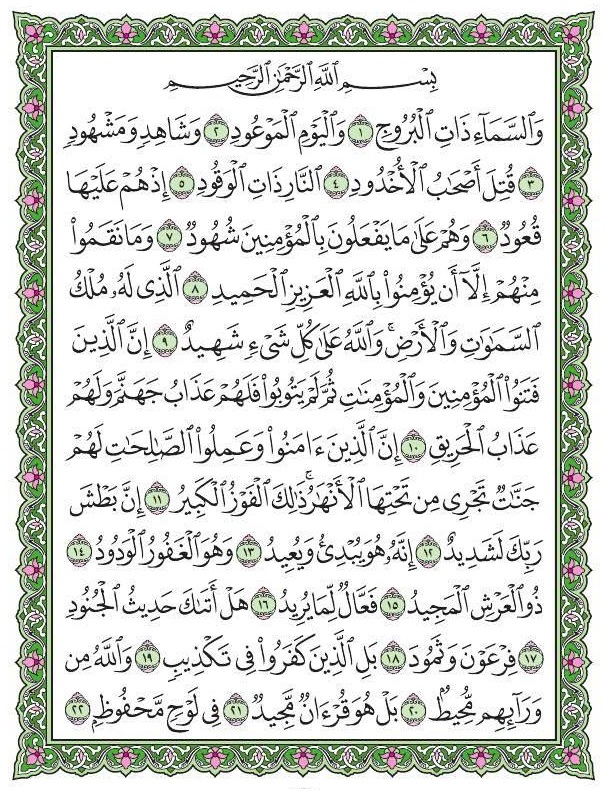
Surah Al-Buruj (Arabic: سورة البروج) is the 85th chapter of the Holy Qur’an. It contains 22 verses and is a Makki Surah revealed during a period of severe persecution faced by the early Muslims in Makkah.
The word Al-Buruj means “The Great Constellations” or “The Mighty Stars and Celestial Mansions”. The Surah begins with an oath by the sky containing magnificent constellations, directing human attention toward Allah’s power and the certainty of the Day of Judgment.
The central message of this Surah is:
True believers may face trials and persecution in this world, but Allah’s justice is inevitable, and ultimate success belongs to those who remain steadfast upon faith.
One of the most powerful sections of the Qur’an, Surah Al-Buruj narrates the story of the People of the Ditch (Ashab al-Ukhdud)—believers who were burned alive because they refused to abandon their faith.
Basic Information About Surah Al-Buruj
| Detail | Information |
|---|---|
| Surah Name | Al-Buruj (The Constellations) |
| Surah Number | 85 |
| Total Verses | 22 |
| Revelation | Makki |
| Juz | 30 |
| Main Theme | Steadfastness, persecution, divine justice |
| Other Name | The Great Constellations |
Meaning of “Al-Buruj”
The Arabic word Buruj (بروج) refers to:
- Great constellations in the sky
- Celestial stations
- Massive heavenly structures
Allah swears by the sky and its magnificent constellations to emphasize the certainty of what follows.
These signs remind humanity that:
- Allah controls the universe
- Creation is not random
- Divine justice is certain
Historical Background of Surah Al-Buruj
This Surah was revealed when Muslims in Makkah were:
- Tortured for their faith
- Boycotted socially and economically
- Mocked and abused
- Pressured to abandon Islam
Allah revealed this Surah to strengthen believers and remind them that previous nations also faced persecution.
The Surah recounts the famous incident of Ashab al-Ukhdud (People of the Ditch).
Who Were the People of the Ditch (Ashab al-Ukhdud)?
The Qur’an mentions believers who were burned alive for refusing to abandon their faith.
According to authentic Islamic narrations:
- A tyrant king opposed belief in Allah.
- A young believer spread faith among the people.
- Many accepted belief in Allah.
- The king ordered trenches to be dug.
- Massive fires were lit.
- Believers were thrown into the flames because they refused to renounce faith.
Allah immortalized their sacrifice in the Qur’an.
Their story became a symbol of:
- Patience
- Courage
- Faith under persecution
- Trust in Allah
Central Theme of Surah Al-Buruj
The main message is:
No matter how powerful oppressors appear, Allah’s justice will ultimately prevail.
The Surah teaches:
- Faith requires sacrifice
- Oppression is temporary
- Allah sees every injustice
- Paradise awaits the patient believers
Major Themes of Surah Al-Buruj
1. Oaths by the Sky and the Day of Judgment
The Surah begins with powerful oaths:
- By the sky containing constellations
- By the promised Day
- By the witness and the witnessed
These oaths emphasize:
Judgment Day is absolutely certain.
2. The Story of Ashab al-Ukhdud
Allah condemns those who:
- Dug trenches
- Filled them with fire
- Burned believers alive
Their crime against believers was simple:
The believers believed in Allah.
3. Persecution of Believers
The Surah highlights an important reality:
Throughout history, believers have often faced:
- Torture
- Oppression
- Discrimination
- Mockery
Yet faith remains victorious.
4. Allah Witnesses Every Injustice
Allah declares:
He was watching everything they did.
No tyrant escapes Allah’s knowledge.
No oppression goes unnoticed.
5. Severe Punishment for Oppressors
Those who:
- Torture believers
- Oppress people
- Reject repentance
Face severe punishment in the Hereafter.
6. Mercy Through Repentance
One of the remarkable aspects of this Surah:
Allah mentions that even persecutors can still repent.
This demonstrates Allah’s immense mercy.
7. Reward for Believers
Believers who remain steadfast receive:
- Gardens beneath which rivers flow
- Eternal happiness
- Allah’s pleasure
- Everlasting reward
8. Allah’s Absolute Power
The Surah repeatedly reminds:
Allah:
- Creates
- Recreates
- Forgives
- Punishes
- Controls all affairs
Nothing escapes His authority.
9. Historical Examples of Destruction
Allah reminds humanity about previous nations:
- Pharaoh
- Thamud
Despite immense power, they were destroyed.
This teaches:
Worldly power cannot protect against divine justice.
10. The Qur’an is Protected
The Surah concludes by affirming:
The Qur’an is:
- Glorious
- Preserved
- Protected by Allah
It cannot be altered or corrupted by human beings.
Tafsir of Key Sections
Verses 1–3
Oaths by the heavens, the promised Day, and witnesses.
Verses 4–8
Story of the People of the Ditch.
Verses 9–11
Allah’s power and reward for believers.
Verses 12–16
Allah’s attributes of power, forgiveness, and sovereignty.
Verses 17–20
Examples of Pharaoh and Thamud.
Verses 21–22
The Qur’an’s protection and preservation.
Major Lessons from Surah Al-Buruj
1. Faith may require sacrifice
True belief sometimes comes with hardship.
2. Oppression is temporary
No tyrant lasts forever.
3. Allah sees all injustice
Nothing escapes divine knowledge.
4. Patience leads to victory
Believers ultimately succeed.
5. Repentance remains open
Allah’s mercy is vast.
6. Paradise is worth every sacrifice
Worldly suffering is temporary.
7. The Qur’an is protected forever
Allah Himself safeguards His revelation.
Benefits of Reflecting on Surah Al-Buruj
Regular reflection helps believers:
- Strengthen faith during hardship
- Develop patience
- Trust Allah’s justice
- Remain steadfast under pressure
- Increase hope in Allah’s mercy
- Appreciate the sacrifices of earlier believers
Connection with Previous Surah
Surah Al-Inshiqaq (84)
Focused on:
- Accountability
- Receiving the book of deeds
- Meeting Allah
Surah Al-Buruj (85)
Focuses on:
- Why believers may suffer before that meeting
- Divine justice against oppressors
- Eternal reward for patience
Together they teach:
Accountability explains why patience in this world is worthwhile.
Why Surah Al-Buruj Matters Today
In today’s world:
- Many Muslims face discrimination
- Faith is often mocked
- Moral values are challenged
- Religious commitment may bring social pressure
Surah Al-Buruj reminds believers:
- Remain firm upon truth
- Do not compromise faith
- Allah sees every struggle
- Ultimate victory belongs to believers
Conclusion
Surah Al-Buruj is one of the Qur’an’s most powerful chapters about faith, sacrifice, and divine justice.
It teaches:
- True faith may be tested
- Oppression never lasts forever
- Allah sees every injustice
- Paradise awaits the patient
- Tyrants ultimately fail
- The Qur’an remains protected forever
The story of the People of the Ditch continues to inspire believers across generations to remain steadfast regardless of challenges.
May Allah grant us the patience of the righteous, the courage of the believers before us, and steadfastness upon Islam until our final breath. Ameen.
