Surah Al Muddathir
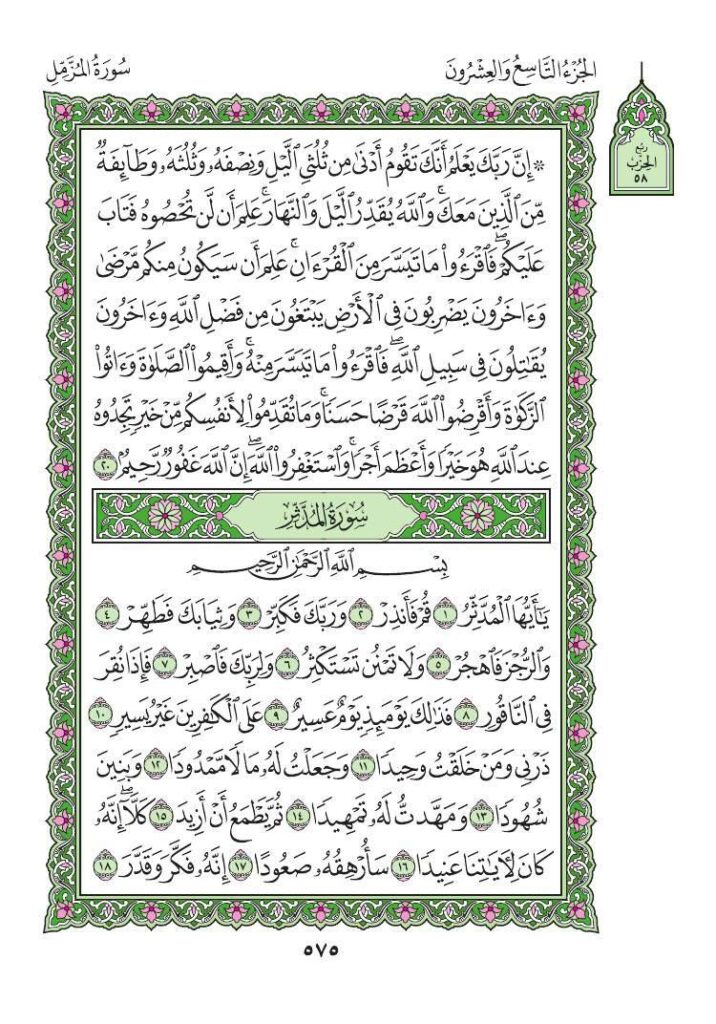


Surah Al-Muddaththir (Arabic: سورة المدثر) is the 74th chapter of the Holy Qur’an. It consists of 56 verses and is a Makki Surah located in Juz 29.
This Surah marks a turning point in the mission of Prophet Muhammad ﷺ. After the initial phase of private worship and spiritual preparation, Allah now commands the Prophet ﷺ to:
- Stand up and warn humanity
- Begin public دعوت (Da’wah)
- Purify his character and intentions
- Stay away from idols and falsehood
- Be patient with opposition
It is one of the earliest commands for public propagation of Islam.
Basic Information About Surah Al-Muddaththir
| Detail | Information |
|---|---|
| Surah Name | Al-Muddaththir (The Cloaked One) |
| Surah Number | 74 |
| Total Verses | 56 |
| Revelation | Makki |
| Juz | 29 |
| Main Theme | Dawah, purification, warning, accountability |
Meaning of “Al-Muddaththir”
The word Al-Muddaththir (المدثر) means:
“The one wrapped in a cloak”
It refers to the Prophet Muhammad ﷺ when he was covered in a garment, seeking comfort and reflection after receiving revelation.
Allah addresses him directly:
“O you who is cloaked, arise and warn!”
This marks a shift from personal worship to public responsibility.
Historical Background of Surah Al-Muddaththir
At the beginning of Islam:
- The Prophet ﷺ received revelation in solitude
- He was instructed to worship and prepare spiritually (Surah Al-Muzzammil)
- After that preparation, this Surah commanded public دعوت
This Surah was revealed when:
- Islam was beginning to spread openly
- Opposition from Quraysh was increasing
- The message needed to be declared publicly
Central Theme of Surah Al-Muddaththir
The main message is:
A believer must purify himself, stand for truth, and warn humanity about accountability before Allah.
It focuses on:
- Responsibility of conveying Islam
- Moral purification
- Warning against shirk and sin
- Reality of Hell and Judgment Day
Major Themes of Surah Al-Muddaththir
1. Command to Rise and Warn
Allah commands:
- Stand up immediately
- Warn people of Allah’s punishment
- Declare Tawheed publicly
This marks the beginning of open Islamic preaching.
Lesson
Faith is not passive—it requires action.
2. Purification of Character
Allah instructs:
- Purify your clothes
- Avoid all impurity
- Stay away from idols
- Do not give with expectation of reward
This refers to:
- Clean intentions
- Moral purity
- Spiritual integrity
3. Patience for the Sake of Allah
The Prophet ﷺ is told:
- Be patient with your Lord
- Endure opposition
- Do not lose hope
Lesson
Truth always faces resistance, but patience leads to success.
4. Warning Against Arrogance
The Surah condemns a man who:
- Rejected the Qur’an
- Thought deeply but arrogantly
- Planned false accusations against the Prophet ﷺ
This refers to leaders of Makkah who opposed Islam.
5. Description of Hell (Saqar)
Allah describes Hell:
- It leaves nothing and spares nothing
- It burns skin
- It is guarded by angels
When asked what led them there, disbelievers say:
- We did not pray
- We did not feed the poor
- We indulged in falsehood
- We denied the Day of Judgment
Lesson
Neglecting prayer and morality leads to destruction.
6. The Importance of Prayer
One of the key sins mentioned is:
Not establishing Salah (prayer)
This shows prayer is central to salvation.
7. Denial of the Hereafter
Disbelievers mocked:
- Resurrection
- Accountability
- Divine judgment
But the Surah confirms:
The Day of Judgment is real and unavoidable.
8. Role of the Qur’an
The Qur’an is described as:
- A reminder
- A warning
- A guide for humanity
9. Universality of the Message
The Surah emphasizes:
- Islam is for all people
- The warning applies to everyone
- No one is exempt from accountability
10. Choice of Guidance or Misguidance
Allah states:
- Whoever wishes may take guidance
- But guidance comes only by Allah’s will
Tafsir of Key Sections
Verses 1–7
Command to rise, warn, and purify oneself.
Verses 8–10
Warning of the Day of Judgment.
Verses 11–31
Story of arrogant rejection and punishment of disbelievers.
Verses 32–48
Description of Hell (Saqar) and reasons for punishment.
Verses 49–56
Reminder that people can either accept or reject guidance.
Major Lessons from Surah Al-Muddaththir
1. Dawah is a responsibility
Faith must be shared with others.
2. Purification is essential
Inner and outer purity are required.
3. Prayer is non-negotiable
Neglecting Salah leads to loss.
4. Arrogance destroys truth
Ego prevents guidance.
5. Accountability is real
Every action will be judged.
6. Hell is a warning
It exists as a consequence of rejection.
7. Guidance requires willingness
Truth is clear, but acceptance depends on the heart.
Benefits of Reflecting on Surah Al-Muddaththir
This Surah helps believers:
- Strengthen commitment to prayer
- Improve moral character
- Develop courage in truth
- Avoid arrogance and pride
- Understand responsibility of dawah
- Increase awareness of accountability
Connection with Previous Surah
Surah Al-Muzzammil (73)
Focused on:
- Night worship
- Spiritual preparation
- Personal connection with Allah
Surah Al-Muddaththir (74)
Focuses on:
- Public mission
- Social responsibility
- Warning humanity
Together they show:
Spiritual preparation leads to public responsibility.
Why Surah Al-Muddaththir Matters Today
In modern society:
- Many avoid responsibility
- Truth is often ignored
- Moral decline is common
- Prayer is neglected
This Surah teaches:
- Stand for truth
- Do not fear opposition
- Maintain prayer
- Live with purpose
- Prepare for accountability
Conclusion
Surah Al-Muddaththir is a powerful Surah that transforms a believer from personal spirituality into public responsibility.
It teaches:
- Rise and warn humanity
- Purify intentions and actions
- Establish prayer consistently
- Avoid arrogance and denial
- Accept accountability before Allah
- Prepare for the Hereafter
It is a Surah of awakening—calling every believer to live with purpose and courage in the path of Allah.
May Allah purify our hearts, strengthen our prayers, and make us among those who uphold truth with patience and sincerity. Ameen.
