Surah At Tahrim
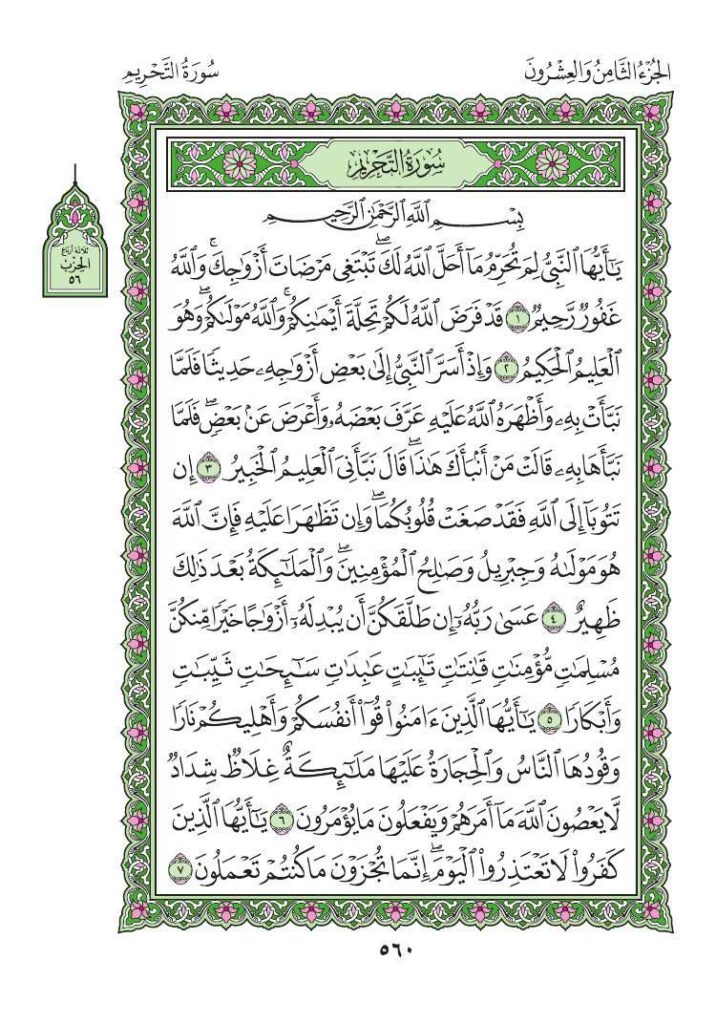
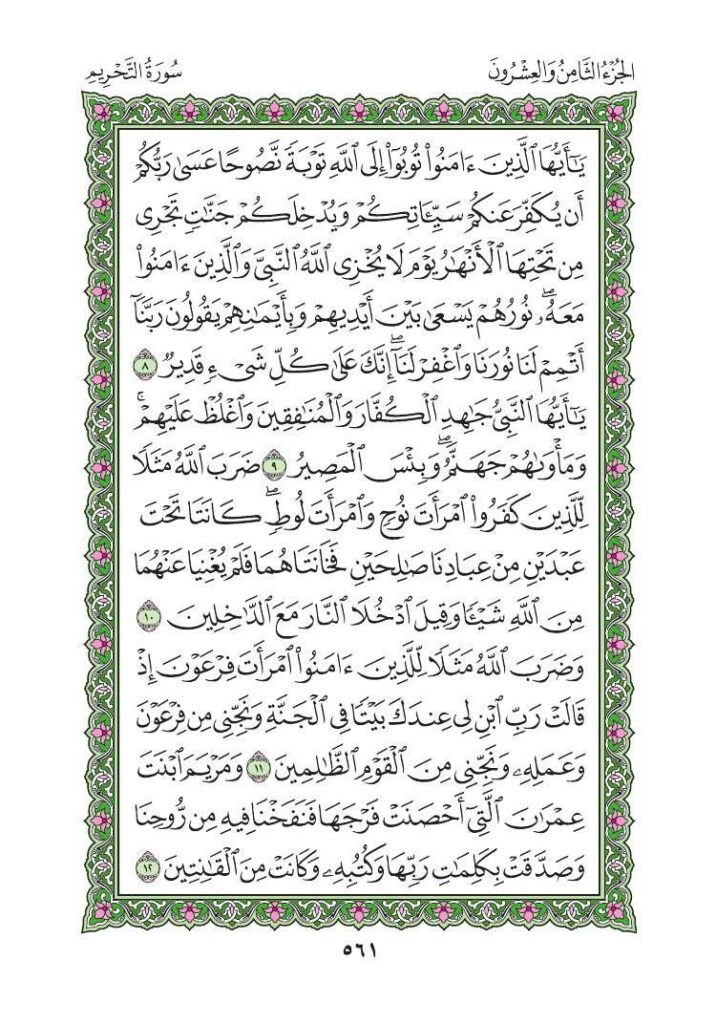
Surah At-Tahrim (Arabic: سورة التحريم) is the 66th chapter of the Holy Qur’an. It is a Madani Surah consisting of 12 verses and is located in Juz 28.
This Surah addresses important lessons related to:
- Family relationships
- Personal responsibility
- Obedience to Allah
- Sincere repentance (Tawbah)
- Protecting oneself and one’s family from Hellfire
- The role of righteous and unrighteous individuals in society
Although relatively short, Surah At-Tahrim contains profound guidance for believers regarding family life, leadership, accountability, and spiritual purification.
The Surah emphasizes that:
No relationship can save a person without faith, and no difficulty can harm a believer who remains sincere to Allah.
Basic Information About Surah At-Tahrim
| Detail | Information |
|---|---|
| Surah Name | At-Tahrim (The Prohibition) |
| Surah Number | 66 |
| Total Verses | 12 |
| Revelation | Madani |
| Juz | 28 |
| Main Theme | Family guidance, repentance, accountability |
Meaning of “At-Tahrim”
The word At-Tahrim (التحريم) means:
“The Prohibition”
The Surah begins by addressing an incident in which Prophet Muhammad ﷺ prohibited something lawful for himself in order to please some of his wives.
Allah reminded His Messenger ﷺ that:
No one should make unlawful what Allah has made lawful.
This opening establishes an important Islamic principle:
Only Allah has the authority to declare things lawful (Halal) or unlawful (Haram).
Historical Background of Surah At-Tahrim
According to authentic narrations found in major books of Tafsir and Hadith, the opening verses relate to a personal incident involving the Prophet Muhammad ﷺ and some of his wives.
The exact details are discussed by scholars, but the lesson remains clear:
- The Prophet ﷺ sought harmony within his household.
- Certain private matters became public.
- Allah revealed guidance regarding family conduct and accountability.
The Surah then expands beyond the specific incident and provides universal guidance for all believers.
Central Themes of Surah At-Tahrim
The Surah revolves around five major themes:
1. Obedience to Allah Above Personal Preferences
2. Family Responsibility
3. Sincere Repentance
4. Protection from Hellfire
5. Examples of Righteous and Unrighteous People
Theme 1: Allah Alone Determines Halal and Haram
The Surah opens by addressing the Prophet ﷺ:
Why do you prohibit what Allah has made lawful for you?
This teaches believers:
- Personal emotions should not override divine law.
- Religious rulings belong only to Allah.
- Good intentions do not change halal into haram.
Practical Lesson
Muslims should follow Islamic guidance rather than cultural pressure or personal desires.
Theme 2: Family Relationships Require Wisdom
The Surah discusses events within the Prophet’s household.
Lessons include:
- Communication matters.
- Trust is important.
- Privacy should be respected.
- Family disagreements should be resolved wisely.
Even the household of the Prophet ﷺ experienced challenges.
This teaches believers that:
Family difficulties are a normal part of life.
Theme 3: The Importance of Tawbah (Repentance)
One of the most beautiful teachings in this Surah is the command:
“Turn to Allah in sincere repentance.”
Scholars explain that sincere repentance includes:
Recognizing the sin
Feeling genuine regret
Stopping the sin
Resolving not to return to it
Allah promises immense forgiveness for those who sincerely repent.
Theme 4: Protect Yourselves and Your Families from Hellfire
One of the most famous verses states:
“O you who believe, protect yourselves and your families from a Fire whose fuel is people and stones.”
This verse places responsibility upon believers to:
- Teach Islam to their families.
- Encourage prayer.
- Promote good character.
- Protect children from harmful influences.
According to classical scholars:
Family leadership is not only financial responsibility but also spiritual responsibility.
Theme 5: The Angels of Hell
The Surah describes powerful angels assigned to Hell.
Characteristics include:
- They never disobey Allah.
- They execute Allah’s commands perfectly.
- They carry out divine justice.
This reminder encourages believers to prepare for the Hereafter.
Theme 6: Struggle Against Disbelief and Hypocrisy
Allah commands the Prophet ﷺ to strive against:
- Open disbelief
- Hidden hypocrisy
The purpose is:
- Protecting faith
- Preserving truth
- Strengthening the Muslim community
Theme 7: Light of the Believers on the Day of Judgment
The Surah describes believers receiving light on the Day of Judgment.
Their supplication will be:
“Our Lord, perfect for us our light and forgive us.”
This light symbolizes:
- Faith
- Guidance
- Good deeds
Believers will be guided safely across the trials of the Hereafter.
Examples of Four Women Mentioned in Surah At-Tahrim
The Surah concludes with four powerful examples.
Example 1: Wife of Prophet Nuh (AS)
She was married to a prophet but rejected faith.
Lesson:
Family connection alone cannot save a person.
Example 2: Wife of Prophet Lut (AS)
She also disbelieved despite living with a prophet.
Lesson:
Everyone is responsible for their own faith.
Example 3: Asiyah (Wife of Pharaoh)
Despite living with one of history’s greatest tyrants, she remained faithful.
She prayed:
“My Lord, build for me a house with You in Paradise.”
Lesson:
A difficult environment does not prevent righteousness.
Example 4: Maryam (Mary)
The mother of Prophet Isa (AS) is praised for:
- Purity
- Faith
- Obedience
- Devotion
She became one of the greatest women in history.
Lesson:
Faith elevates a person regardless of circumstances.
Major Lessons from Surah At-Tahrim
1. Allah Alone Legislates
Humans cannot declare lawful things unlawful.
2. Family Requires Patience
Strong families are built with wisdom and trust.
3. Repentance Opens the Door to Mercy
No sinner should lose hope.
4. Parents Must Guide Their Families
Spiritual education is a responsibility.
5. Faith Is Personal
No relationship guarantees salvation.
6. Righteousness Can Flourish Anywhere
Asiyah and Maryam prove that difficult environments do not prevent faith.
Benefits of Reciting Surah At-Tahrim
By reflecting upon this Surah, believers may:
- Increase family awareness
- Strengthen repentance
- Improve personal accountability
- Deepen trust in Allah
- Learn valuable parenting lessons
- Understand the importance of protecting faith
The greatest benefit comes from:
Understanding and implementing its teachings.
Connection with Previous Surahs
Surah At-Taghabun (64)
Focused on trials through wealth and family.
Surah At-Talaq (65)
Focused on divorce and family regulations.
Surah At-Tahrim (66)
Focuses on spiritual responsibility within the family.
Together they create a comprehensive framework for Islamic family life.
Conclusion
Surah At-Tahrim is a powerful reminder that faith begins at home.
The Surah teaches:
- Allah alone determines halal and haram.
- Families require guidance and responsibility.
- Repentance brings forgiveness.
- Parents must protect their households spiritually.
- Every individual is accountable before Allah.
- True success depends upon faith, not family status.
The examples of the wives of Nuh and Lut, alongside Asiyah and Maryam, demonstrate one of the Qur’an’s most profound truths:
Every soul stands before Allah based on its own faith and deeds.
May Allah grant us sincere repentance, righteous families, strong faith, and the light of guidance on the Day of Judgment. Ameen.
