Surah At Talaq
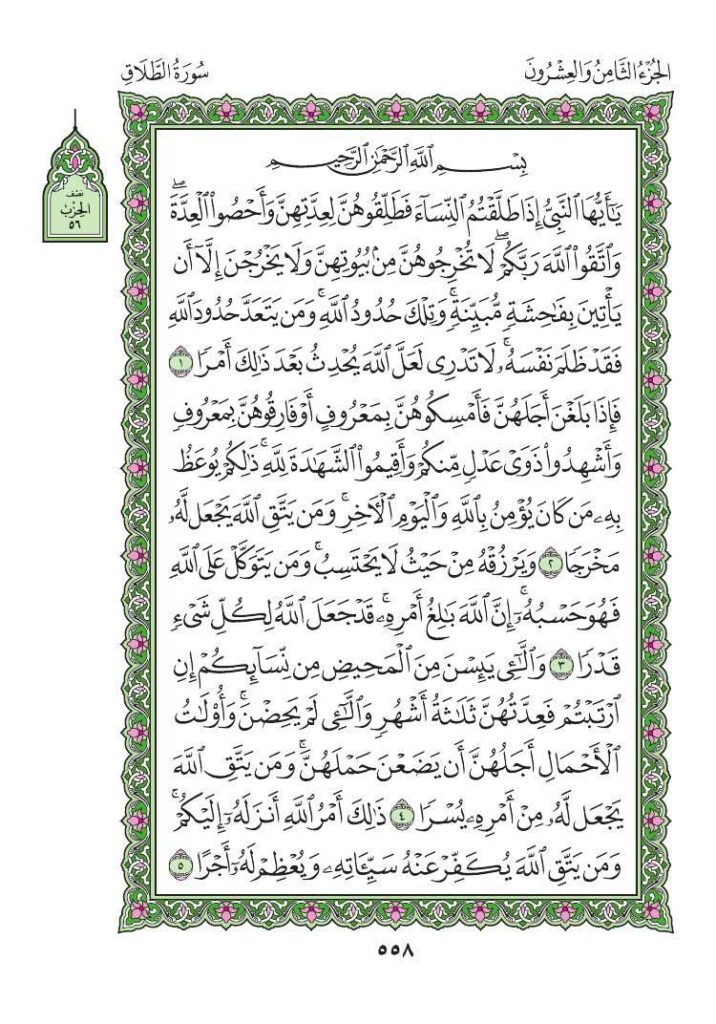
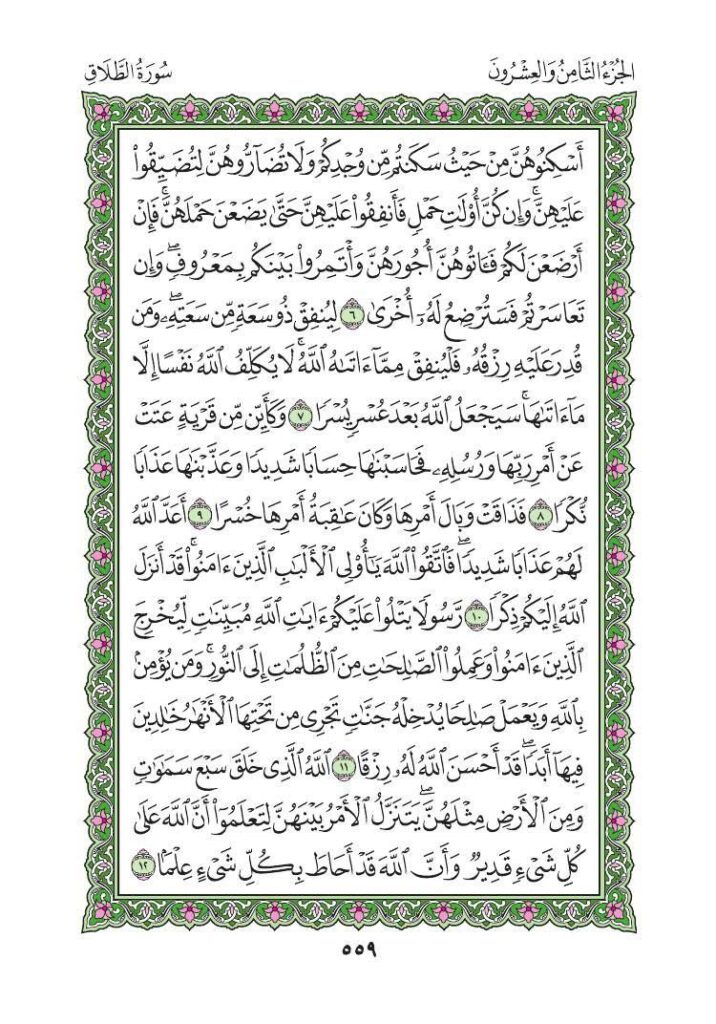
Surah At-Talaq (Arabic: سورة الطلاق) is the 65th chapter of the Holy Qur’an. It is a Madani Surah consisting of 12 verses.
This Surah focuses on:
- Rules of divorce in Islam
- Rights and responsibilities of husband and wife
- Trust in Allah during hardship
- Provision (rizq) from Allah
- Patience and piety in difficult times
It is a Surah that teaches:
Even in separation, Islam brings justice, dignity, and spiritual guidance.
Basic Information about Surah At-Talaq
- Surah Number: 65
- Number of Verses: 12
- Makki or Madani: Madani
- Juz: 28–29
- Theme: Divorce laws, trust in Allah, and patience
Meaning of “At-Talaq”
The word At-Talaq (الطلاق) means:
“Divorce” or “separation”
It refers to:
- The Islamic legal process of ending marriage
- A regulated system, not emotional chaos
- A framework of fairness and dignity
Islam does not encourage divorce, but regulates it to:
Protect both partners from injustice.
Central Themes of Surah At-Talaq
1. Proper Method of Divorce
Allah commands:
- Divorce must be given in a structured way
- It should be done during a pure state (not emotional conflict period)
- Waiting periods must be observed
This ensures:
Justice, reflection, and reduced harm.
2. Fear of Allah in Family Matters
The Surah repeatedly emphasizes:
“Fear Allah, your Lord.”
Meaning:
- Do not ظلم (oppress) your spouse
- Do not misuse divorce rights
- Maintain moral responsibility
3. Waiting Period (Iddah)
After divorce:
- Women must observe a waiting period
- This ensures clarity in lineage
- Allows time for reconciliation
It shows:
Islam protects family structure even during separation.
4. Provision Comes from Allah
A powerful message:
- Allah provides from unexpected sources
- Even in hardship, sustenance continues
- Trust in Allah is essential
5. Trust in Allah During Hardship
The Surah teaches:
- Whoever trusts Allah, He is enough for them
- Allah brings ease after difficulty
- Relief comes after patience
6. Consequences of Disobedience
Those who:
- Ignore Allah’s commands
- Oppress others in marriage
- Act without piety
Will face:
Accountability and consequences.
7. Balance Between Law and Mercy
The Surah combines:
- Legal rulings
- Emotional guidance
- Spiritual reminders
Islam is both:
A legal system and a moral system.
Tafsir of Key Verses (Simplified Explanation)
Verses 1–2: Rules of divorce
Divorce must follow proper Islamic procedure with waiting period.
Verses 3–4: Trust in Allah
Allah provides for those who rely on Him.
Verses 5–6: Responsibility in marriage
Both partners must act with justice and fear of Allah.
Verses 7–8: Ease after hardship
Difficulty is followed by relief from Allah.
Verses 9–12: Consequences and divine power
Disobedience leads to punishment; obedience leads to reward.
Key Lessons from Surah At-Talaq
1. Divorce must be handled with justice
Islam regulates it to prevent harm.
2. Fear of Allah is essential in relationships
Every decision must consider accountability.
3. Provision is from Allah, not humans
Hardship does not stop divine sustenance.
4. Patience leads to relief
Every difficulty has an end.
5. Islamic law protects dignity
Even separation is handled with respect.
Spiritual and Practical Benefits
Surah At-Talaq strengthens:
- Family responsibility
- Emotional control during conflict
- Trust in Allah’s provision
- Patience in hardship
- Awareness of Islamic law
Practical application:
- Avoid emotional decisions in relationships
- Trust Allah in financial difficulty
- Follow Islamic guidance in disputes
- Be patient during life changes
Connection with Previous Surah
Surah At-Talaq follows Surah At-Taghabun (64):
- Surah At-Taghabun → life as a test (wealth & family)
- Surah At-Talaq → handling one of the hardest family tests
Together they show:
Life test + real-life application in family matters
Conclusion
Surah At-Talaq teaches that:
- Divorce must be handled with justice
- Fear of Allah protects relationships
- Provision comes from Allah alone
- Hardship is followed by ease
- Islamic law protects dignity and balance
It is a Surah that:
Brings discipline, justice, and trust in Allah during emotional trials.
Allah knows best.
