Surah Al Ahqaf
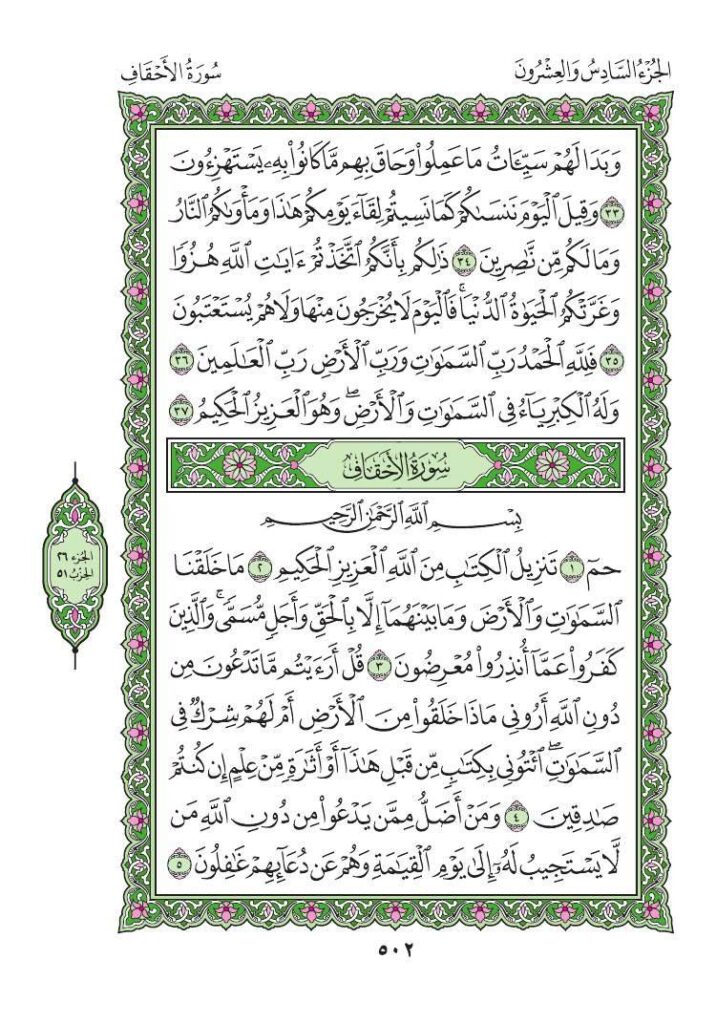
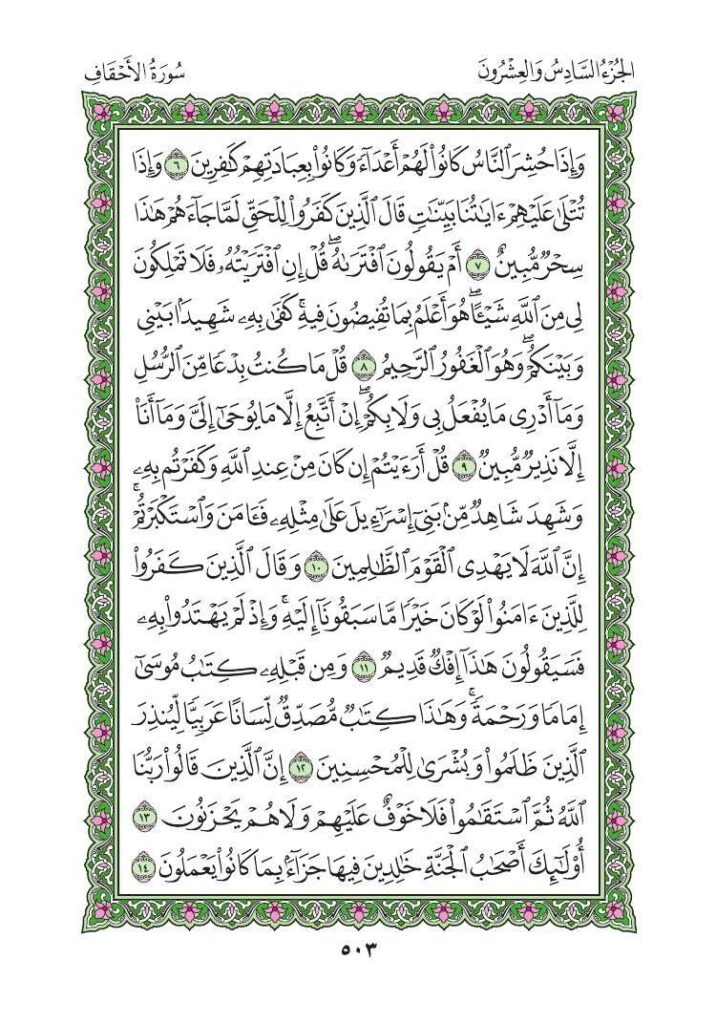
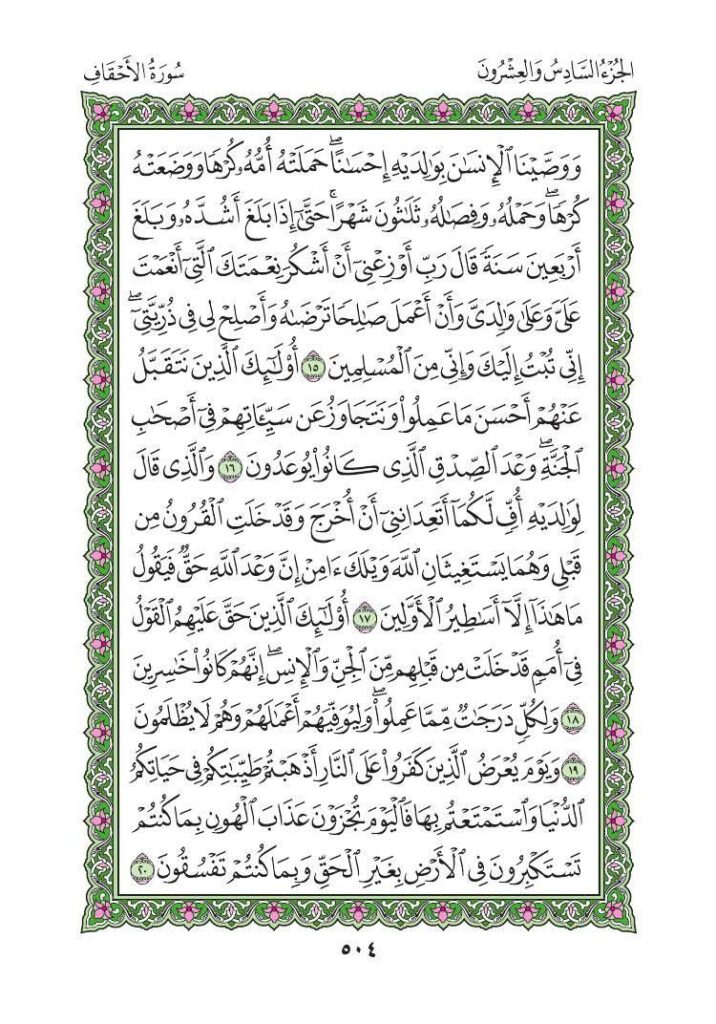
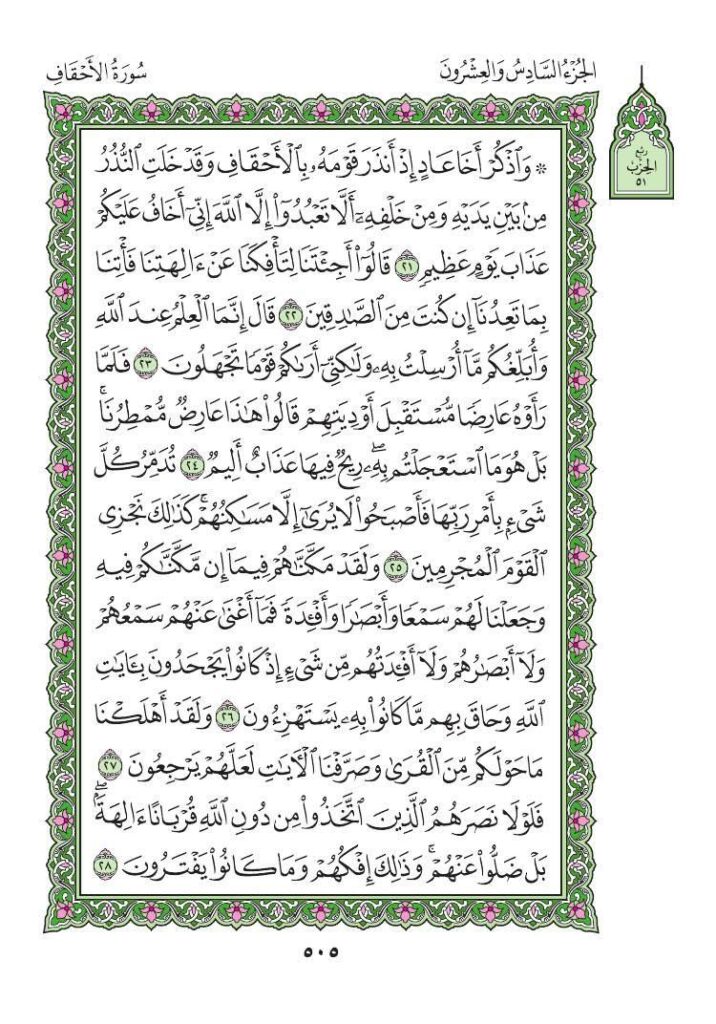
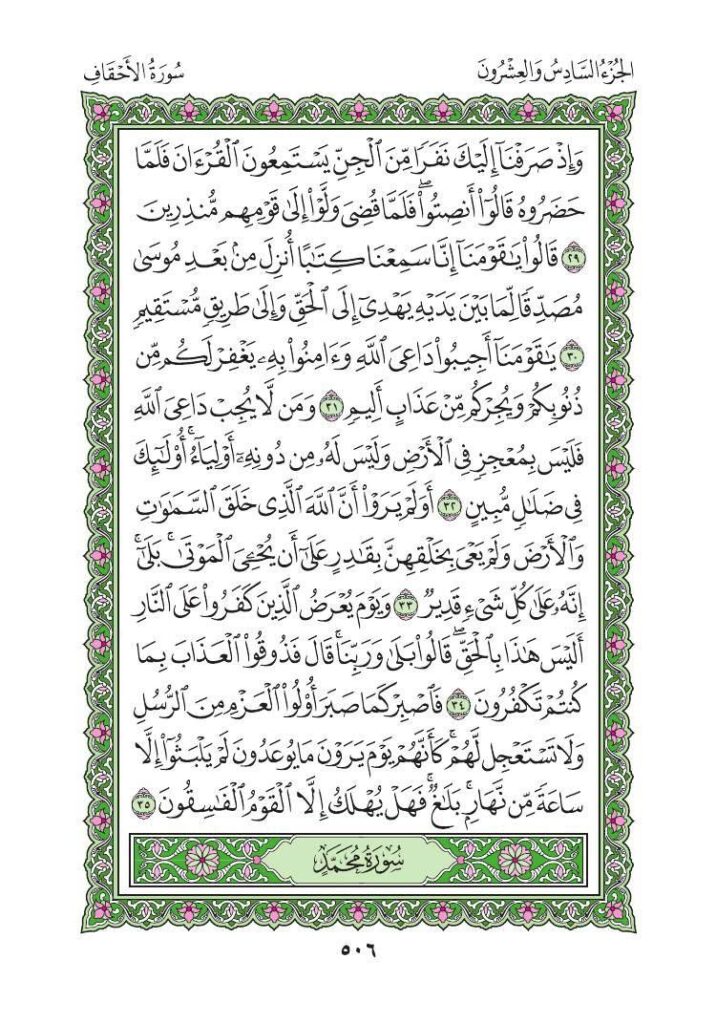
Surah Al-Ahqaf (Arabic: سورة الأحقاف) is the 46th chapter of the Holy Qur’an. It is a Makki Surah consisting of 35 verses and is the final Surah in the group of Ha-Mim Surahs (40–46).
The word “Al-Ahqaf” refers to the sand dunes or curved sandy hills in the region where the ancient people of ‘Ad once lived.
This Surah carries powerful themes of:
- Tawheed (Oneness of Allah)
- Truth of the Qur’an as revelation
- Warning against arrogance and disbelief
- The story of Prophet Hud (AS) and the people of ‘Ad
- Honoring parents and righteous character
- Accountability in the Hereafter
It is a Surah that closes the Ha-Mim series with a strong reminder:
Those who reject truth will face consequences, but those who believe and act righteously will be successful.
Basic Information about Surah Al-Ahqaf
- Surah Number: 46
- Number of Verses: 35
- Makki or Madani: Makki
- Juz: 26
- Revelation Period: Late Makkan period
- Group: Final Ha-Mim Surah
Meaning of “Al-Ahqaf”
The term Al-Ahqaf refers to:
- Long curved sand dunes
- The desert region of the ancient people of ‘Ad
- Located historically in the southern Arabian Peninsula (believed area: Yemen / Oman region)
Why the name matters:
It reminds us that:
Even mighty civilizations can disappear completely when they reject Allah’s message.
Historical Context of Revelation
Surah Al-Ahqaf was revealed in Makkah during a period when:
- Quraysh strongly rejected the Prophet ﷺ
- Arguments against resurrection continued
- Islam was being mocked and opposed
The Surah responds by:
- Highlighting destroyed nations before Quraysh
- Presenting the Qur’an as divine truth
- Warning against arrogance and denial
It also contains a unique reference to a group of jinn who listened to the Qur’an and believed, showing that truth reaches hearts beyond humans.
Central Themes of Surah Al-Ahqaf
1. The Qur’an is a Divine Revelation
The Surah begins by affirming that the Qur’an:
- Is revealed from Allah
- Is not fabricated
- Confirms previous scriptures
It challenges disbelievers:
If it is from Allah, then rejecting it is dangerous.
2. The Futility of Idol Worship
The Surah criticizes those who worship:
- False gods
- Idols that cannot respond or help
- Objects with no power over life or death
It asks a logical question:
Why worship something that cannot even hear you?
3. The Story of the People of ‘Ad
A major warning is given through the story of ‘Ad, the people of Prophet Hud (AS):
- They were strong and powerful
- They lived in luxurious civilization
- They became arrogant and rejected truth
Result:
- A destructive wind punishment
- Their civilization was wiped out
- Only ruins remained in the desert
This shows:
Power without faith leads to destruction.
4. Honoring Parents (Unique Moral Teaching)
The Surah beautifully highlights:
- Kindness to parents
- Especially the struggle of motherhood
- Gratitude for upbringing
It describes a righteous person who:
- Recognizes Allah
- Is grateful to parents
- Prays for righteousness in family
This is one of the strongest moral sections in the Qur’an regarding family rights.
5. The Believing Jinn
A remarkable part of the Surah mentions:
- A group of jinn listening to the Qur’an
- They immediately believed
- They returned to guide their people
This proves:
- The Qur’an is not limited in influence
- Truth impacts all creation
- Guidance is universal
6. Accountability and the Hereafter
The Surah emphasizes:
- Resurrection is real
- Every action will be judged
- Disbelievers will regret their denial
- Believers will receive mercy
Tafsir of Key Verses (Simplified Explanation)
Verses 1–6: Revelation of the Qur’an
Allah confirms that the Qur’an is from Him and challenges false beliefs about idols.
Verses 7–10: Denial of Truth
Disbelievers accuse the Prophet ﷺ of fabrication, but the Qur’an defends its divine origin.
Verses 11–14: Believers and Disbelievers
Those who believe remain steadfast; those who reject truth face loss.
Verses 15–18: Rights of Parents
Strong emphasis on:
- Gratitude to parents
- Prayer for them
- Righteous family life
Verses 19–25: The People of ‘Ad
Their destruction is presented as a warning for all arrogant nations.
Verses 26–28: False gods powerless
Idols are shown as completely helpless on the Day of Judgment.
Verses 29–32: The Jinn who believed
A group of jinn listened to the Qur’an and accepted Islam immediately.
Verses 33–35: Resurrection and warning
The Surah concludes by affirming:
- Allah can resurrect the dead
- Truth will be made clear
- Disbelievers will face consequences
Key Lessons from Surah Al-Ahqaf
1. Truth is not limited to humans
Even jinn recognized the truth of the Qur’an.
2. Arrogance destroys civilizations
The people of ‘Ad serve as a historical warning.
3. Family rights are sacred
Islam places strong emphasis on honoring parents.
4. Idols and false beliefs are powerless
Only Allah controls life, death, and destiny.
5. Accountability is certain
Every human being will return to Allah.
Spiritual and Practical Benefits
Surah Al-Ahqaf encourages:
- Gratitude to parents
- Reflection on past civilizations
- Strengthening belief in the unseen
- Avoiding arrogance and pride
- Strengthening relationship with Qur’an
Practical life application:
- Respect and care for parents
- Learn from history
- Stay humble in success
- Strengthen faith through reflection
Connection with Previous Surahs
Surah Al-Ahqaf completes the Ha-Mim series:
- Surah Ghafir (40)
- Surah Fussilat (41)
- Surah Ash-Shura (42)
- Surah Az-Zukhruf (43)
- Surah Ad-Dukhan (44)
- Surah Al-Jathiyah (45)
- Surah Al-Ahqaf (46)
Together they emphasize:
- Revelation of Qur’an
- Signs of Allah
- Accountability
- Past nations destroyed due to arrogance
Conclusion
Surah Al-Ahqaf teaches that:
- The Qur’an is a divine truth
- Arrogance leads to destruction
- Gratitude to parents is essential
- Even unseen beings recognize truth
- Accountability is unavoidable
It closes the Ha-Mim series with a strong reminder:
Only those who accept truth, remain humble, and prepare for the Hereafter will succeed.
Allah knows best.
