Surah Al Hujurat

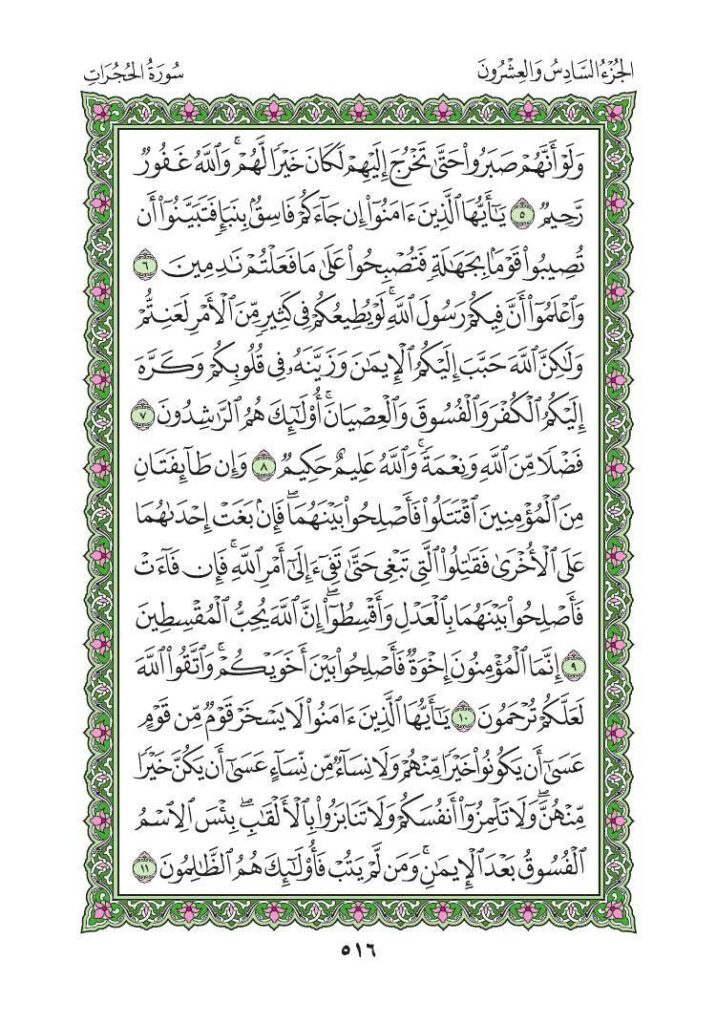

Surah Al-Hujurat (Arabic: سورة الحجرات) is the 49th chapter of the Holy Qur’an. It is a Madani Surah consisting of 18 verses, making it one of the shortest but most socially powerful chapters in the Qur’an.
This Surah is unique because it focuses heavily on Islamic manners (Adab), ethics, and social behavior within the Muslim community.
It teaches believers how to:
- Respect the Prophet Muhammad ﷺ
- Speak and behave with manners
- Avoid suspicion and gossip
- Build unity in society
- Strengthen brotherhood among Muslims
Because of its ethical depth, Surah Al-Hujurat is often called:
The Surah of Islamic Social Code
Basic Information about Surah Al-Hujurat
- Surah Number: 49
- Number of Verses: 18
- Makki or Madani: Madani
- Juz: 26
- Revelation Context: Madinah society formation period
Meaning of “Al-Hujurat” (The Rooms)
The word Al-Hujurat refers to:
- The private rooms of the Prophet Muhammad ﷺ in Madinah
- Where his wives (RA) lived
The Surah is named after these rooms because it begins with etiquette regarding:
How to behave in the presence of the Prophet ﷺ
Historical Context of Revelation
Surah Al-Hujurat was revealed when:
- Muslims were learning to live as a structured society
- Delegations from Arab tribes visited Madinah
- Some people behaved rudely or without proper manners
The Surah corrected:
- Social behavior
- Communication ethics
- Respect for leadership
- Community unity
It built the foundation of:
Islamic civilization and social discipline
Central Themes of Surah Al-Hujurat
1. Respect for Allah and His Messenger ﷺ
The Surah begins with a strict command:
- Do not put your opinions before Allah and His Messenger
- Do not raise your voice over the Prophet ﷺ
- Show complete respect in his presence
This teaches:
True faith includes respect and discipline.
2. Verification of Information
A major principle of the Surah is:
“If a wicked person brings you news, verify it carefully.”
This establishes:
- No spreading rumors
- No accepting unverified information
- Importance of truth and evidence
This is a foundation of:
- Islamic ethics
- Responsible communication
3. Brotherhood Among Believers
Allah declares:
“The believers are brothers.”
This means:
- Muslims are a single family
- Conflict must be resolved with justice
- Reconciliation is encouraged
Unity is a central pillar of Islam.
4. Avoiding Mockery, Insults, and Slander
The Surah strictly prohibits:
- Mocking others
- Insulting people
- Giving harmful nicknames
- Backbiting and gossip
These behaviors destroy:
- Trust
- Unity
- Social harmony
5. Avoiding Suspicion and Spying
Allah warns:
- Do not assume bad intentions
- Do not spy on others
- Do not investigate private faults
This protects:
- Personal dignity
- Social peace
- Community trust
6. Equality of All Humans
The Surah establishes a universal principle:
The most honored in the sight of Allah is the most righteous.
This removes:
- Racism
- Tribal superiority
- Social arrogance
Islam defines superiority only by:
- Taqwa (God-consciousness)
Tafsir of Key Verses (Simplified Explanation)
Verses 1–5: Respect for the Prophet ﷺ
Believers are commanded to follow proper etiquette and not raise voices above the Prophet ﷺ.
Verses 6–8: Verification of news
Any information must be confirmed before acting upon it.
Verses 9–10: Conflict resolution
If two groups of believers fight, reconciliation must be attempted.
Verses 11–12: Social sins forbidden
Mockery, insults, suspicion, and backbiting are strictly prohibited.
Verses 13–14: Equality of humanity
All humans come from one origin; nobility is based on righteousness.
Verses 15–18: True faith
True believers are those who:
- Believe sincerely
- Strive in Allah’s path
- Do not doubt
Key Lessons from Surah Al-Hujurat
1. Islam is a complete social system
It teaches how to behave in every aspect of life.
2. Words have consequences
Speech can build unity or destroy relationships.
3. Verification is essential
Information must always be checked before belief or action.
4. Brotherhood is sacred
Muslims are required to protect unity.
5. Superiority is only through Taqwa
No race, tribe, or nationality is superior.
Spiritual and Practical Benefits
Surah Al-Hujurat develops:
- Strong moral character
- Social responsibility
- Respectful communication
- Community harmony
- Humility and equality
Practical application:
- Avoid spreading rumors
- Speak respectfully
- Verify information online and offline
- Treat all people fairly
- Avoid judging others
Connection with Previous Surah
Surah Al-Hujurat follows Surah Al-Fath (48):
- Surah Al-Fath → victory and unity
- Surah Al-Hujurat → discipline and ethics
Together they show:
Victory must be followed by good character and social order.
Conclusion
Surah Al-Hujurat teaches that:
- Respect and manners are part of faith
- Society must be built on truth and unity
- Gossip and suspicion destroy communities
- All humans are equal except in righteousness
It is a Surah that builds:
A peaceful, disciplined, and morally strong society
Allah knows best.
