Surah Al Mumtahanah

Introduction to Surah Al-Mumtahanah
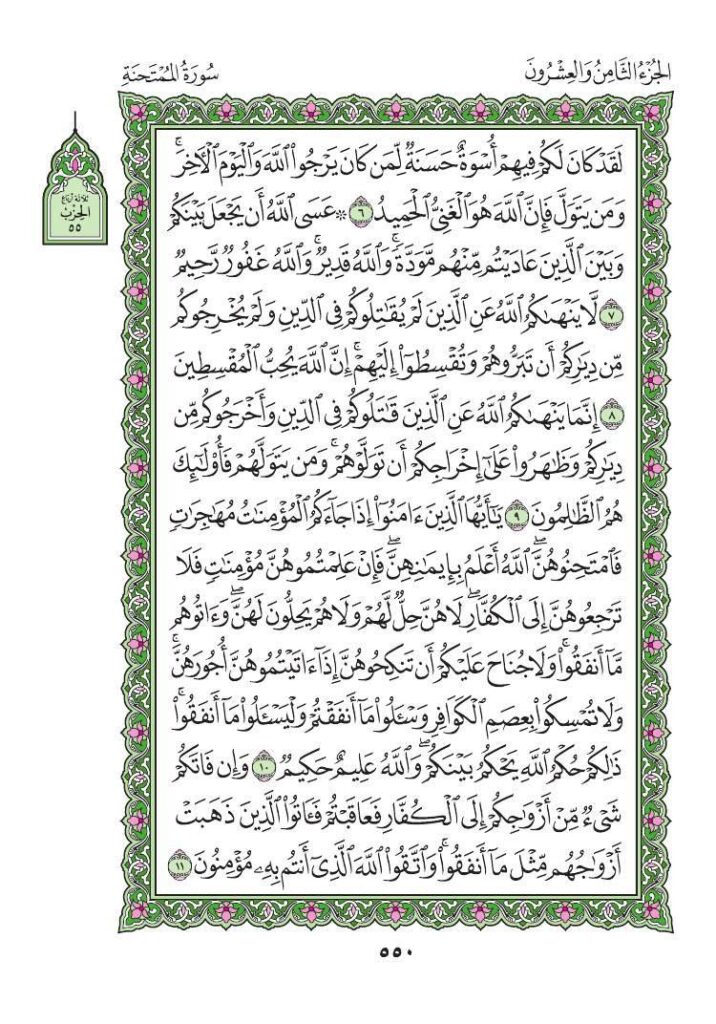
Surah Al-Mumtahanah (Arabic: سورة الممتحنة) is the 60th chapter of the Holy Qur’an. It is a Madani Surah consisting of 13 verses.
This Surah focuses on:
- Loyalty and disloyalty in faith
- Social and political relationships
- Rules of friendship and alliance
- Treatment of non-Muslims in wartime and peace
- Strengthening Islamic identity
It is a Surah that builds:
Clear boundaries between faith, hypocrisy, and social conduct.
Basic Information about Surah Al-Mumtahanah
- Surah Number: 60
- Number of Verses: 13
- Makki or Madani: Madani
- Juz: 28
- Theme: Loyalty, identity, and social relations
Meaning of “Al-Mumtahanah”
The word Al-Mumtahanah (الممتحنة) means:
“The woman who is tested”
It refers to:
- Believing women migrating from Makkah to Madinah
- Who were tested to confirm their faith
- Before being accepted into the Muslim community
This establishes:
Faith must be sincere, not claimed falsely.
Historical Context of Revelation
Surah Al-Mumtahanah was revealed when:
- Muslims migrated between Makkah and Madinah
- Some individuals claimed Islam for personal benefit
- Political tensions existed between Muslims and Quraysh
The Surah provided guidance on:
- Who can be trusted
- Who should not be allied with
- How to deal with migrating believers
Central Themes of Surah Al-Mumtahanah
1. Loyalty to Allah Above All
The Surah strongly commands:
- Do not take enemies of Allah as close allies
- Even if they are family or relatives
- Faith must come first
This teaches:
Identity in Islam is based on belief, not blood alone.
2. Example of Prophet Ibrahim (AS)
Allah gives the example of Ibrahim (AS):
- He distanced himself from idol worshippers
- He declared clear separation from false beliefs
- Except for his prayer for guidance
Lesson:
True faith requires clarity and courage.
3. Treatment of Migrating Believing Women
The Surah explains:
- Women who migrate for faith should be tested
- If sincere, they are accepted into the Muslim community
- Their marriage status is reviewed fairly
This establishes:
- Justice
- Protection of women’s rights
- Verification of sincerity
4. Rules of Alliance and Friendship
Believers are guided:
- Do not form alliances with those actively hostile to Islam
- But kindness and justice toward peaceful non-Muslims is allowed
- Balance is essential
5. Justice and Fairness
Allah commands:
- Always act justly
- Even toward enemies
- Never let hatred lead to injustice
This principle is universal:
Justice is a core value of Islam.
6. The Pledge of Faith
The Surah mentions:
- Women giving allegiance to the Prophet ﷺ
- Promising not to commit major sins
- Committing to obedience and righteousness
This shows:
Faith is a commitment, not just belief.
Tafsir of Key Verses (Simplified Explanation)
Verses 1–3: Warning against enemies
Believers are warned not to secretly support enemies of Islam.
Verses 4–6: Example of Ibrahim (AS)
A model of clear separation from disbelief is presented.
Verses 7–9: Possibility of peaceful relations
Allah allows kindness toward those who are not hostile.
Verses 10–11: Testing believing women
Sincerity is verified before acceptance into the community.
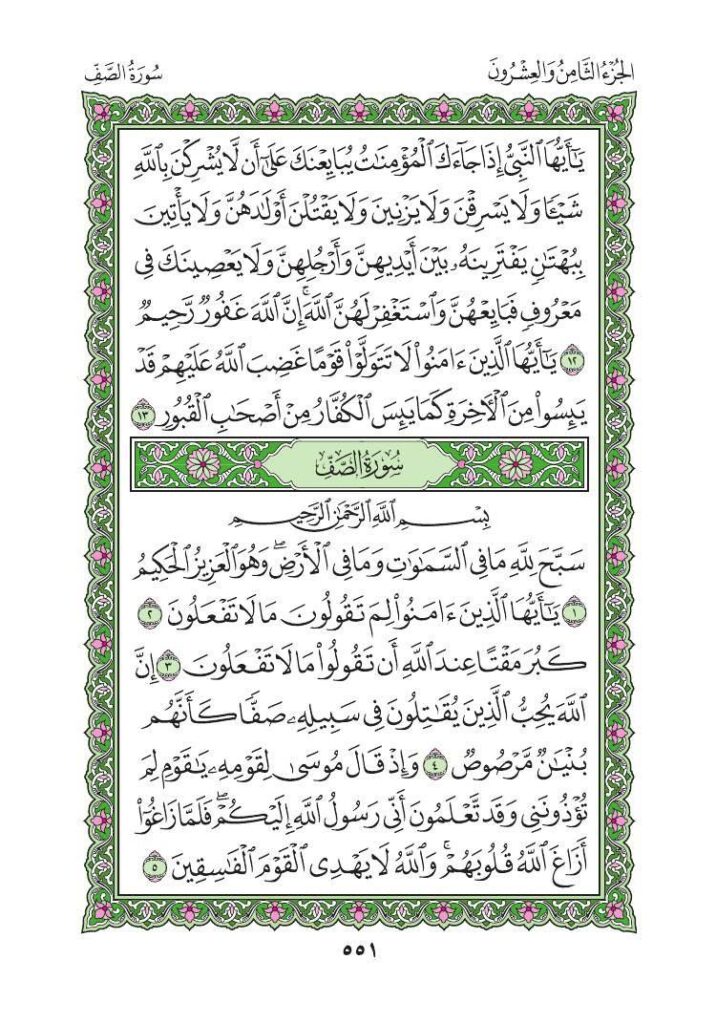
Verses 12–13: Final pledge and guidance
Believers commit to obedience and moral discipline.
Key Lessons from Surah Al-Mumtahanah
1. Faith comes before relationships
Loyalty to Allah is the highest priority.
2. Justice must never be abandoned
Even enemies must be treated fairly.
3. Sincerity is essential
Claiming faith is not enough—truth must be proven.
4. Islam balances loyalty and fairness
It is neither blind hostility nor blind acceptance.
5. Identity in Islam is belief-based
Faith defines community, not nationality or tribe.
Spiritual and Practical Benefits
Surah Al-Mumtahanah strengthens:
- Islamic identity awareness
- Ethical relationships
- Justice in decisions
- Clarity in loyalty
- Protection from hypocrisy
Practical application:
- Choose friends based on values
- Be fair even in conflict
- Avoid blind emotional decisions
- Strengthen sincerity in faith
Connection with Previous Surah
Surah Al-Mumtahanah follows Surah Al-Hashr (59):
- Surah Al-Hashr → community discipline and divine authority
- Surah Al-Mumtahanah → personal loyalty and social boundaries
Together they show:
Community structure + personal responsibility
Conclusion
Surah Al-Mumtahanah teaches that:
- Faith defines loyalty
- Justice must always be maintained
- Sincerity is essential in belief
- Relationships must be guided by values
- Islam balances mercy with discipline
It is a Surah that:
Protects identity, strengthens faith, and builds moral clarity.
Allah knows best.
