Surah Ar Rahman
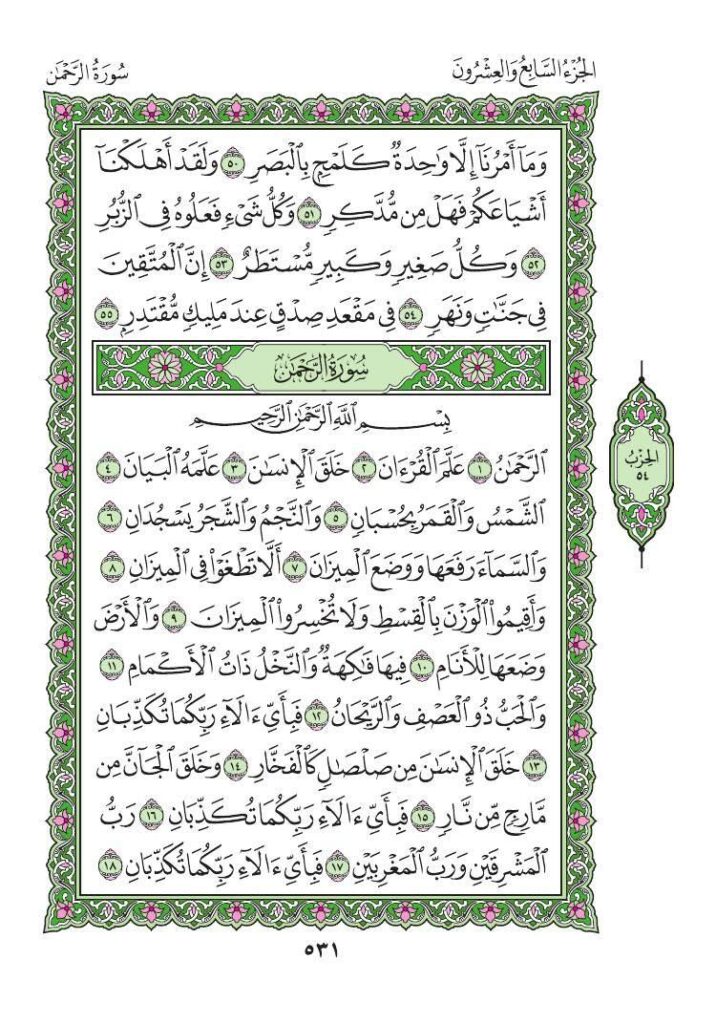
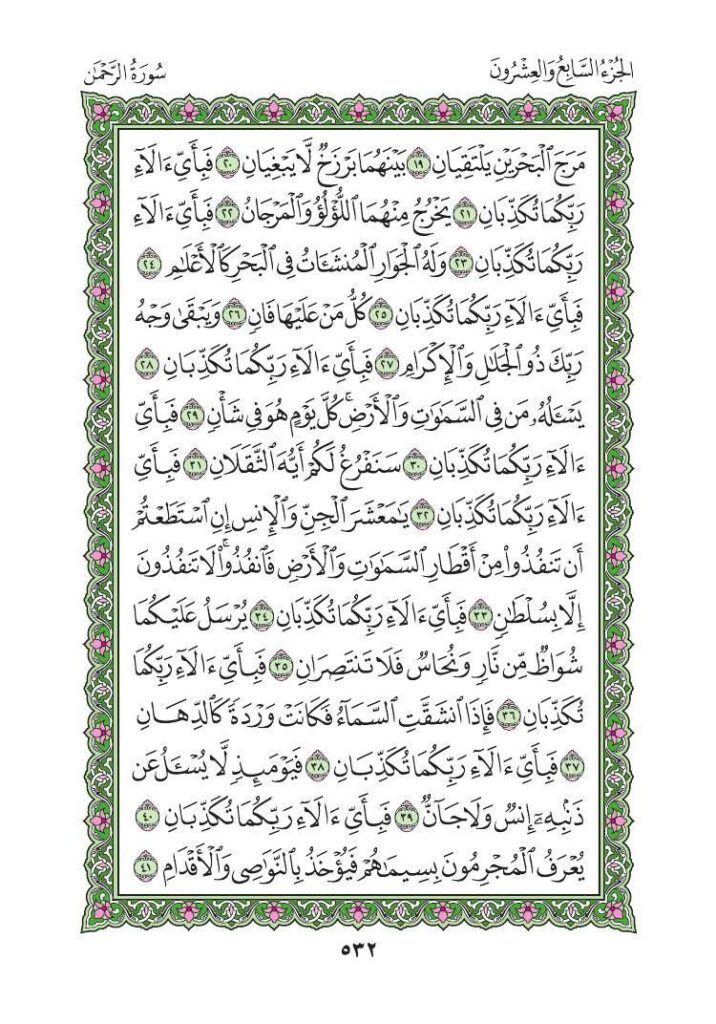
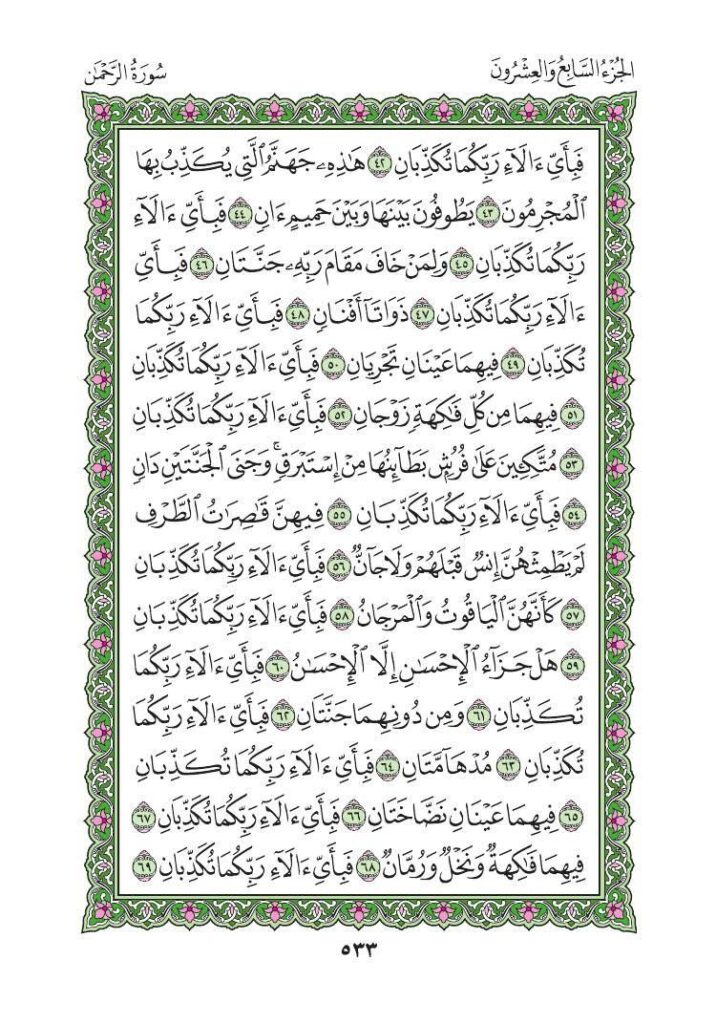
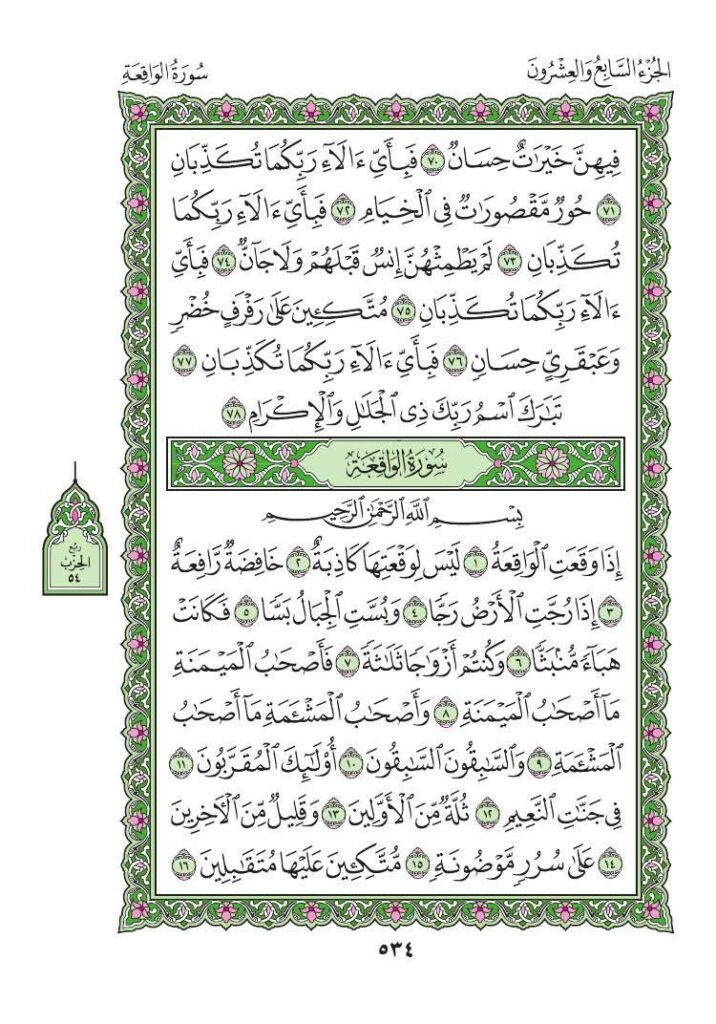
Surah Ar-Rahman (Arabic: سورة الرحمن) is the 55th chapter of the Holy Qur’an. It is widely regarded as one of the most beautiful, rhythmic, and spiritually powerful Surahs in the Qur’an.
It contains 78 verses and is a Madani Surah according to many scholars, though some classify parts of it as Makki in style.
This Surah is unique because it repeatedly asks:
“Which of the favors of your Lord will you deny?”
This repetition creates deep reflection and emotional awakening in the heart.
Basic Information about Surah Ar-Rahman
- Surah Number: 55
- Number of Verses: 78
- Makki or Madani: Mostly considered Madani (with Makki characteristics)
- Juz: 27
- Theme: Allah’s mercy, blessings, and accountability
Meaning of “Ar-Rahman” (The Most Merciful)
The name Ar-Rahman (الرحمن) means:
“The Most Merciful” – the One whose mercy encompasses all creation.
This Surah emphasizes:
- Divine mercy in creation
- Blessings given to humans and jinn
- Balance between mercy and accountability
It is a Surah that teaches:
Everything we have is a gift from Allah’s mercy.
Central Theme of Surah Ar-Rahman
The entire Surah revolves around one powerful idea:
Allah’s countless blessings cannot be denied.
And after every major blessing, Allah repeats:
“Which of the favors of your Lord will you deny?”
This creates:
- Awareness
- Gratitude
- Humility
- Reflection
Structure of Surah Ar-Rahman
The Surah is beautifully structured into three main sections:
1. Allah’s worldly blessings
2. The blessings of the Hereafter
3. The final judgment between believers and disbelievers
Major Themes of Surah Ar-Rahman
1. The Teaching of the Qur’an
The Surah begins with:
- Allah is Ar-Rahman
- He taught the Qur’an
- He created الإنسان (humanity)
- He taught expression and communication
This shows:
The Qur’an itself is the greatest mercy.
2. Signs in the Universe
Allah describes:
- The sun and moon moving in perfect balance
- Plants and trees in prostration
- The sky raised high
- The earth laid out for creation
These signs show:
The universe is built on divine balance and mercy.
3. Balance in Creation
Allah says:
“He raised the sky and established the balance.”
This teaches:
- Justice
- Order
- Harmony in nature and life
Humans are commanded:
Do not disturb this balance.
4. Blessings of Earth
The Surah highlights:
- Fruits and plants
- Date palms and grains
- Sweet and salty seas
- Pearls and coral
Every blessing is a sign of:
Allah’s generosity and mercy.
5. Meeting of Two Seas
A beautiful image is given:
- Two seas meet but do not mix completely
- One is sweet, one is salty
- A barrier is placed between them
This shows:
Allah controls even the hidden laws of nature.
6. Creation of Humans and Jinn
Allah clearly states:
Both humans and jinn are created for worship.
This means:
- Purpose of life is submission to Allah
- Accountability applies to both worlds
7. Description of Paradise
The Surah gives one of the most detailed descriptions of Paradise:
Believers will enjoy:
- Gardens with flowing rivers
- Fruits and comfort
- Beautiful companions
- Peace and safety
- No fear or sadness
This is the reward of:
Those who feared standing before their Lord.
8. Two Levels of Paradise
The Surah describes:
- Two gardens for each believer
- Each with different levels of reward
- Additional blessings beyond imagination
This shows:
Allah’s mercy is far greater than human deeds.
9. Contrast with Hell
Although mercy dominates the Surah, it also reminds:
- Denial leads to punishment
- Rejecting truth has consequences
- Justice will be established
10. Final Majesty of Allah
The Surah ends by declaring:
- Everything in existence depends on Allah
- His mercy and glory are infinite
- Only He remains eternal
Tafsir of Key Verses (Simplified Explanation)
Verses 1–4: Teaching the Qur’an
Allah introduces Himself as the Most Merciful and highlights the Qur’an as guidance.
Verses 5–16: Signs in creation
Sun, moon, stars, and earth operate in perfect balance.
Verses 17–25: Natural resources
Seas, plants, and minerals are blessings for humanity.
Verses 26–30: Everything perishes except Allah
All creation depends on Him alone.
Verses 31–45: Warning to jinn and humans
Accountability is for both worlds.
Verses 46–78: Description of Paradise
Detailed imagery of reward, peace, and eternal joy.
Key Lessons from Surah Ar-Rahman
1. Everything is a blessing
Nothing in life is random or without purpose.
2. Gratitude is essential
Human success depends on recognizing blessings.
3. Balance is part of divine order
Life, nature, and morality all follow balance.
4. Accountability is universal
Both humans and jinn are responsible.
5. Paradise is real and beyond imagination
Its rewards are greater than human understanding.
Spiritual and Practical Benefits
Surah Ar-Rahman strengthens:
- Gratitude toward Allah
- Awareness of blessings
- Reflection on creation
- Hope in Paradise
- Fear of accountability
Practical application:
- Say Alhamdulillah often
- Reflect on daily blessings
- Avoid arrogance and ingratitude
- Strengthen worship
Connection with Previous Surah
Surah Ar-Rahman follows Surah Al-Qamar (54):
- Surah Al-Qamar → warning and destruction of past nations
- Surah Ar-Rahman → mercy and blessings of Allah
Together they show:
Warning + Mercy = Complete guidance
Conclusion
Surah Ar-Rahman teaches that:
- Allah is the Most Merciful
- Every blessing is from Him
- Humans and jinn are accountable
- Paradise is the ultimate reward
- Gratitude is the key to success
It is a Surah that:
Softens the heart, increases gratitude, and deepens love for Allah.
Allah knows best.
