Surah Kahaf Read Online


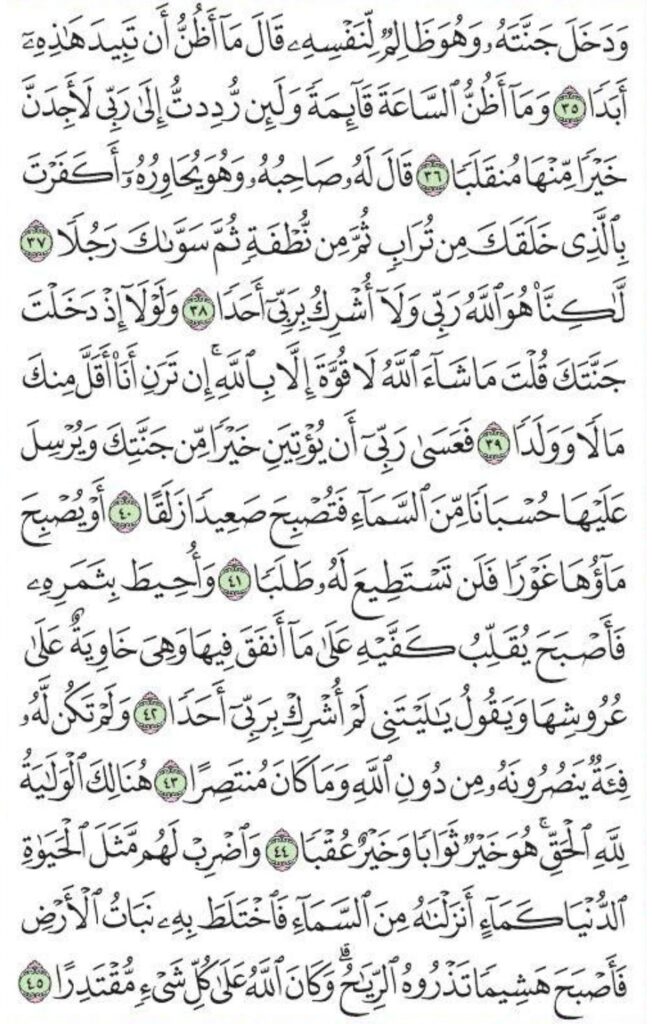
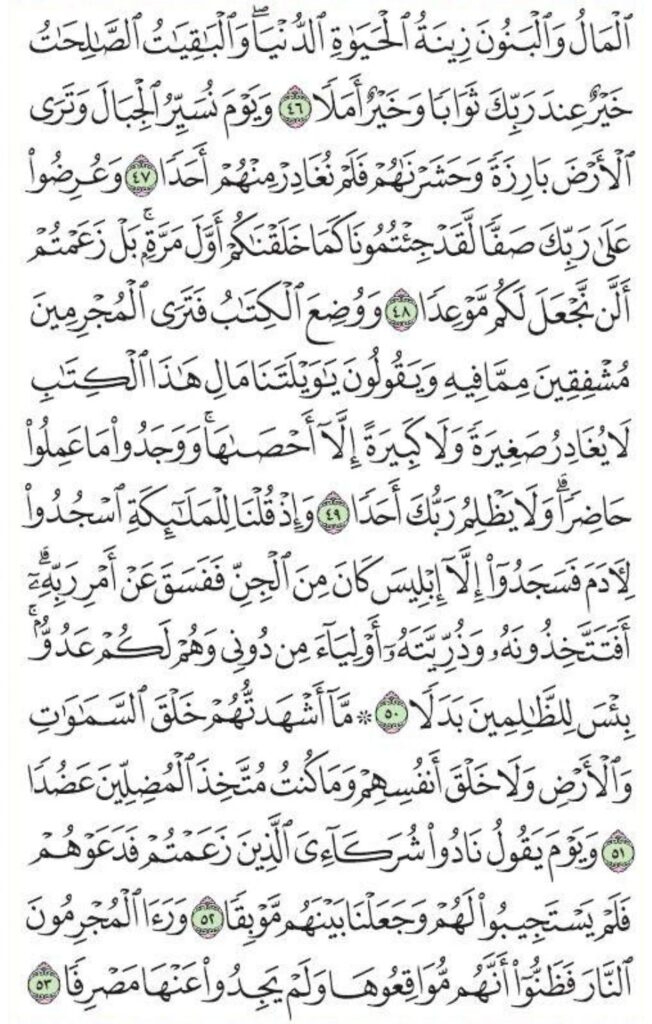


Surah al-Kahf (The Cave) is the 18th surah of the Noble Qur’an and has 110 verses. It is a Meccan surah sent down prior to the migration of the Prophet ﷺ to Madinah. This surah is one of the most favorite surahs of the Quran because it contains eternal advice, spiritual protection, and deep stories that reflect the battle of faith, the limitations of human intellect, the truth about power, and the testaments of believers in this worldly life.
The Prophet ﷺ stressed its recitation, especially on Fridays, and guaranteed immense benefits for those who recite it on a regular basis. In this article, we will learn about the main stories in Surah al-Kahf, their wisdom, the prophetic hadeeth about its virtues, and how it relates to our lives.
The Four Stories in Surah al-Kahf
1. The Story of the People of the Cave (Ashab al-Kahf)
This narrative focuses on a community of young faithful living amidst a society riddled with disbelief and idolatry. To shield their belief, they separated from their people and took refuge in a cave, where Allah made them sleep for centuries. When they woke up, their presence became evidence of Allah’s control over life, death, and resurrection.
Fawa’id (Lessons):
- Belief at times calls for sacrifice and withdrawal from corrupting atmospheres.
- Allah defends honest believers even in the most improbable situations.
- The narrative is an evident evidence of resurrection and existence after death.
2. The Owner of Two Gardens
There is a second parable in Surat al-Kahf, that of a rich man who was given two beautiful gardens. His pride made him refuse the Hereafter and claim his blessings as his own strength. When Allah annihilated his gardens, he was filled with regret, having come to realize too late that he had trusted in the things of this world rather than Allah.
Fawa’id (Lessons):
- Wealth and position are fleeting; success is in gratitude and belief.
- Conceit leads to ruin, while humility attains Allah’s mercy.
- The parable reminds us of the transience of dunya and eternity of akhirah.
3. The Story of Musa and al-Khiḍr (Verses 60–82)
This is a poignant reminder of the limitations of human knowledge. Musa (عليه السلام) was commanded to encounter a servant of Allah called al-Khiḍr, who had received special knowledge. Musa wanted to learn from him, but he was tested by events that appeared unfair: sinking a boat, slaying a boy, and repairing a wall in an enemy town.
Only afterwards did al-Khiḍr provide the explanation for each act, keeping boat owners safe from a tyrant, rescuing the parents of the boy from further suffering, and keeping treasure for orphans to reach adulthood.
Fawa’id (Lessons):
- God’s wisdom is beyond man’s comprehensions.
- To acquire knowledge requires patience.
- What seems harmful can have hidden blessings.
4. The Story of Dhul-Qarnayn (Verses 83–101)
Dhul-Qarnayn was a just and powerful ruler whom Allah blessed with power and resources. He journeyed throughout the world, setting up justice and helping oppressed nations. One of his most important tasks was constructing a barrier against Ya’juj and Ma’juj (Gog and Magog), a destructive nation. He ruled with justice, power, and piety, always giving thanks to Allah.
Fawa’id (Lessons):
- Genuine leadership combines justice, humility, and service to mankind.
- Power is a trust by Allah and should be exercised wisely.
- Trial of power is one of the largest tests in life.
- Themes and Wisdom of Surah al-Kahf
- The four tales depict four major trials of life:
- Trial of Faith – People of the Cave.
- Trial of Wealth – Owner of Two Gardens.
- Trial of Knowledge – Musa and al-Khiḍr.
- Trial of Power – Dhul-Qarnayn.
Together, they constitute an extensive reminder that faith, riches, wisdom, and authority are trials from Allah, and success comes through humility, patience, and reliance on Him.
Hadiths about the virtues, benefits, and excellence of Surah al-Kahf
- Narration of Al-Bara’ ibn ‘Azib (رضي الله عنه):
A man was reciting Surah al-Kahf while he had a horse tied with two ropes next to him. A cloud descended and started to shade him, and it started to come close, and the horse began to turn away from it. When morning broke, he went to the Prophet ﷺ and told him about that. The Prophet ﷺ said: That was tranquility which descended for the Qur’an.
- Narration of Abu al-Darda’ (رضي الله عنه):
The Prophet ﷺ said:
“Whoever memorizes ten verses from the beginning of Surah al-Kahf will be safeguarded against the Dajjal.”
- In another narration: “(Whoever memorizes from) the last ten verses of Surah al-Kahf.”
- Narration of Abu Sa’id al-Khudri (رضي الله عنه):
“Whoever recites Surah al-Kahf as it was revealed, it will be light for him on the Day of Resurrection from his position until Makkah.”. And whooever recites the last ten verses of it, then the False Messiah (Dajjal) appears, he will have no power over him. And whoever performs ablution and then utters: SubhanakaAllahummawabiḥamdik, lailahailla anta, astaghfirukawaatubuilayk (Glory be to You, O Allah, and with Your praise, there is no god but You, I seek Your forgiveness and turn to You in repentance) – it will be written on a scroll, sealed, and it will not be broken until the Day of Resurrection.
- Narration of Abu Umamah al-Bahili (رضي الله عنه):
The Prophet of Allah ﷺ spoke to us, and the majority of what he spoke about was the Dajjal, cautioning us against him. Among what he spoke was:
“There has never been a tribulation on the earth, since Allah created the children of Adam, greater than the tribulation of the Dajjal.”. Allah did not send down any prophet without warning his nation about the Dajjal. I am the final of the prophets, and you are the final of the nations, and surely he will appear among you. If he appears during my time among you, then I will face him on behalf of all Muslims. But if he appears after me, then every individual will have to face him individually, and Allah shall be my heir over all the Muslims.
He will come from a road lying between Sham (Syria) and Iraq, and will devastate to the right and to the left. O Allah’s servants, hold fast! I shall tell you about him as no prophet told before me.”. He will start by declaring: I am a prophet, but no prophet will come after me. Then he will declare: I am your Lord, but you will not behold your Lord till ye die. He is one-eyed, and your Lord is not one-eyed. Between his eyes it is written ‘Kafir’ (disbeliever), which all believers will read, be he literate or illiterate.
Among his trials will be the fact that he has with him something that is like Paradise and Hell. His Hell is Paradise, and his Paradise is Hell. Any person who is tried by his fire, let him take refuge in Allah and read the initial verses of Surah al-Kahf, and it will be cool and safe for him just like the fire was cool and safe for Ibrahim.
One of his troubles is that he will tell a Bedouin: ‘If I resurrected your father and mother, would you bear witness that I am your lord?’ He will say: Yes. Then two devils will come to him in the guise of his father and mother and say: ‘O my son, follow him, for he is your lord.’
Among his afflictions is that he will overpower a soul, slay it, and saw it in two halves. Then he will utter: ‘Behold, this servant of mine, I will revive him.’ Allah will bring him back to life, and the evil one will ask: ‘Who is your Lord? He will answer: ‘My Lord is Allah, and you are the enemy of Allah. You are the Dajjal.
By Allah, I have never been more certain of you than I am today.’ The Messenger of Allah ﷺ stated: That man will be the loftiest of my Ummah in position in Paradise.
(The hadith goes on at length explaining the Dajjal’s falsehoods, the famine in advance of his advent, the coming down of Isa (Jesus, peace be upon him), and the death of Dajjal at the gate of Ludd. It also explains the blessing and peace that will extend over the earth after that, when hatred will vanish, wild beasts will become gentle, and the earth will give its abundance.)
(Sunan Ibn Majah, The book of Tribulations)
- Narration of Abu Sa’id al-Khudri (رضي الله عنه):
The Prophet ﷺ narrated:
“Whoever recites Surah al-Kahf on Friday, it will illuminate for him with light between the two Fridays.”
- Narration of Ibn ‘Umar (رضي الله عنهما):
The Messenger of Allah ﷺ stated:
“Whosoever recites Surah al-Kahf on Friday, a light will be emitted for him from under his feet up to the clouds of the sky, illuminating for him on the Day of Resurrection, and he will be forgiven for what falls between the two Fridays.”
(Reported by Ibn Mardawayh in his Tafsir with a sound chain, as quoted by al-Mundhiri in al-Targhibwa al-Tarhib).
- Hadith of Abu Sa’id al-Khudri (رضي الله عنه):
The Prophet of Allah ﷺ said:
“Whoever recites Surah al-Kahf on Friday, a light will shine for him between him and the Ancient House (the Ka’bah).”
(Reported by al-Bayhaqi and al-Hakim).
Virtues of Reciting Surah al-Kahf
1. Protection from theFitnah(Trial) of Dajjal (Antichrist): Its verses protect the believer from one of the biggest tribulations prior to the Day of Judgment.
2. Illumination on Fridays: Reciting it every week provides spiritual illumination and guidance until the following Friday.
3. Faith Enstrengthening: The narratives are constantly reinforcing patience, humility, and trust in Allah.
4. Connection with the Hereafter: The surah turns the believer’s gaze away from worldly affairs toward eternal triumph.
Friday Recitation of Surah al-Kahf
It is a Sunnah to read Surah al-Kahf on Friday. Most scholars, such as Imam al-Nawawi, emphasized this practice and cited that it grants barakah, pardon, and protection from the spiritual realm during the week. This act of worship also rejuvenates the believer’s intention towards the challenges of life and the final destination of meeting Allah.
Frequently Asked Questions About Surah Al-Kahf
Q1: Why is Surah Al-Kahf recommended on Fridays?
It is advisable to recite Surah Al-Kahf every Friday since the Prophet Muhammad ﷺ made a promise that a light will guide the believer until the following Friday.
Q2: How does Surah Al-Kahf defend against the Dajjal?
The Dajjal will mislead humanity through illusions of wealth, power, and fake miracles. Surah Al-Kahf stories reflect these challenges, providing believers with spiritual immunity.
Q3: Do I have to memorize Surah Al-Kahf to benefit from it?
Whereas memorization is very rewarding, recitation and contemplation on it daily also brings tremendous blessings.
Q4: Is recitation of Surah Al-Kahf on Fridays possible for women as well?
Yes, the merits are the same for men and women.
Q5: What are the four chief narratives in Surah Al-Kahf?
- The People of the Cave (belief)
- Owner of the Two Gardens (wealth)
- Musa and Khidr (wisdom)
- Dhul-Qarnayn (power)
Q6: How long is Surah Al-Kahf?
It only requires approximately 20–30 minutes for the average reader to recite its 110 verses.
Conclusion
Surah al-Kahf is not merely a recitation chapter but a guide for passing life’s ultimate tests. The People of the Cave instruct us in faith tested, the Owner of Two Gardens advises us against pride in riches, the journey of Musa and al-Khiḍr reminds us of the limitations of human knowledge, and the journey of Dhul-Qarnayn reminds us of justice in governance and proper use of power.
The Prophet ﷺ underscored its weekly recitation since in it is found protection, illumination, and a reminder of the end times. Amidst a world where there are trials of faith, wealth, knowledge, and power, Surah al-Kahf gives enduring advice to make believers steadfast, humble, and optimistic in Allah’s mercy.
