Surah Nuh
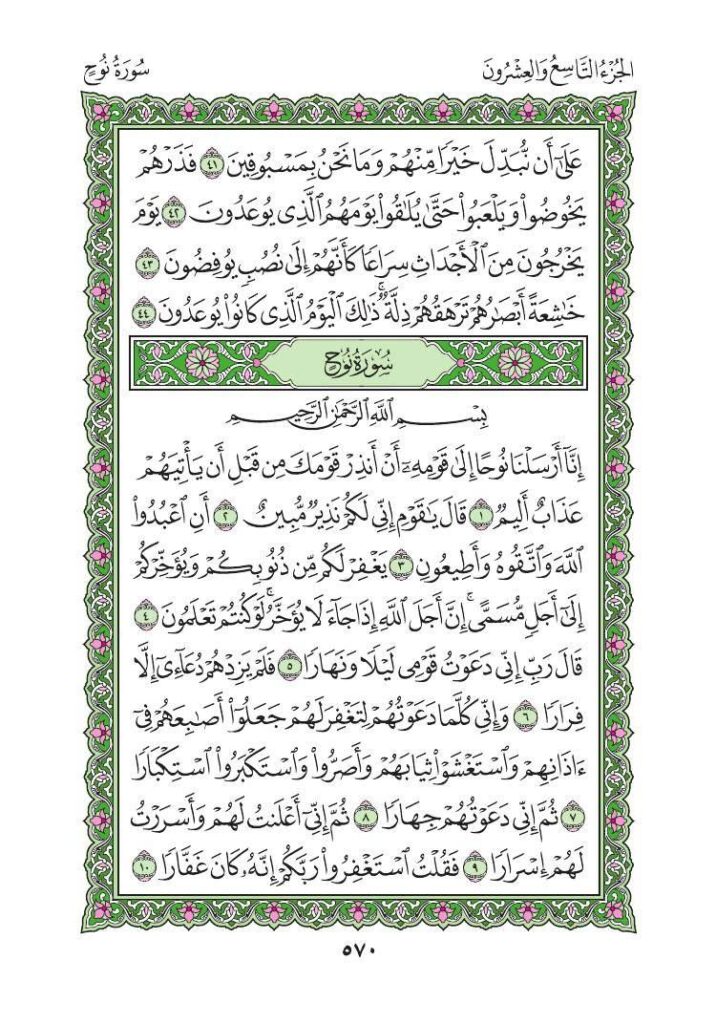
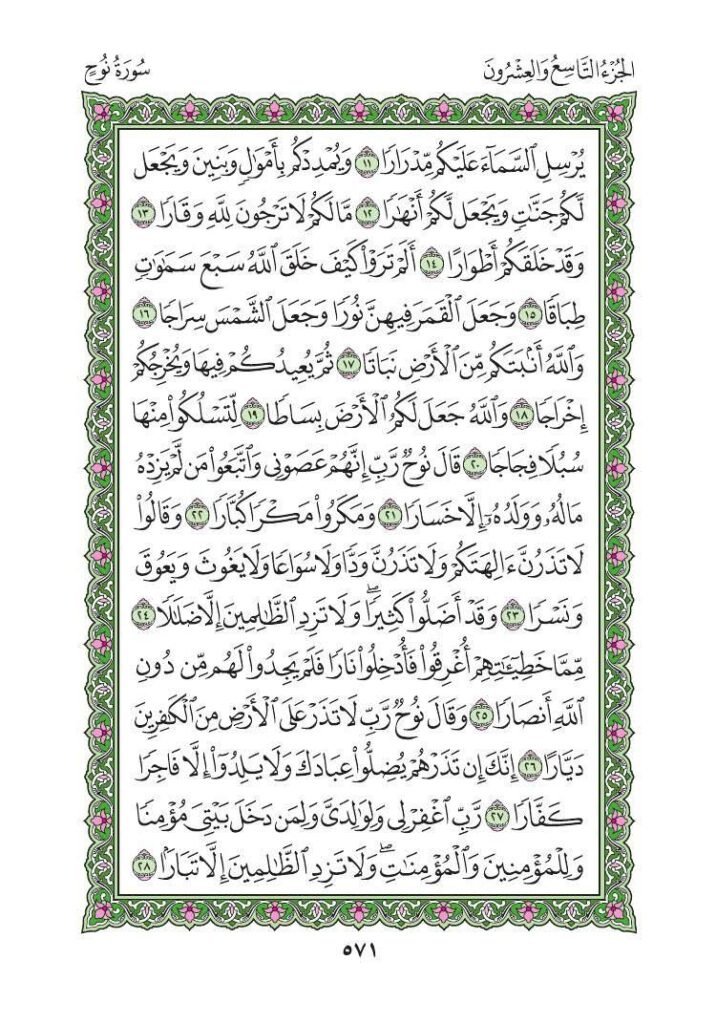
Surah Nuh (Arabic: سورة نوح) is the 71st chapter of the Holy Qur’an. It is a Makki Surah consisting of 28 verses and is located in Juz 29.
This Surah is entirely dedicated to the story of Prophet Nuh (AS) and his lifelong struggle in calling his people to the worship of Allah alone. It highlights themes of:
- Da’wah (calling to Islam)
- Patience in the face of rejection
- The power of sincere prayer
- Human stubbornness and arrogance
- Allah’s mercy and punishment
- Seeking forgiveness (Istighfar)
Surah Nuh is one of the most emotional Surahs in the Qur’an, showing how a Prophet dedicated centuries of his life to guiding his people, yet most of them rejected the truth.
Basic Information About Surah Nuh
| Detail | Information |
|---|---|
| Surah Name | Nuh (Noah) |
| Surah Number | 71 |
| Total Verses | 28 |
| Revelation | Makki |
| Juz | 29 |
| Main Theme | Dawah, patience, repentance, and divine judgment |
Meaning of Surah Nuh
The Surah is named after Prophet Nuh (AS), one of the greatest prophets in Islam.
He is known for:
- His long mission of preaching (nearly 950 years as per Qur’an)
- His patience with rejection
- His unwavering trust in Allah
- His role as the first major messenger sent after Adam (AS)
Surah Nuh reflects his entire mission:
Calling people to Allah with patience, wisdom, and sincerity.
Historical Background of Surah Nuh
Prophet Nuh (AS) was sent to a people who:
- Worshipped idols
- Rejected monotheism
- Followed ancestral traditions blindly
- Mocked the message of Allah
Despite centuries of effort:
- Only a small group believed
- Most people rejected him
- They became more arrogant over time
This Surah summarizes his final complaint to Allah after exhausting all efforts in da’wah.
Central Theme of Surah Nuh
The main message is:
Persistent and sincere calling to Allah is rewarded, even if people reject the message.
The Surah teaches:
- True success is not numbers but sincerity
- Guidance is from Allah alone
- Patience is essential in da’wah
- Repentance brings blessings
Major Themes of Surah Nuh
1. Prophet Nuh’s Struggle in Dawah
Prophet Nuh (AS) says:
He called his people:
- Day and night
- Openly and secretly
- With wisdom and persistence
Despite this:
- They rejected him
- Covered their ears
- Became arrogant
- Insisted on disbelief
This shows:
True guidance requires effort, but acceptance is only from Allah.
2. Methods of Calling to Allah
Nuh (AS) used multiple approaches:
- Public preaching
- Private advice
- Emotional appeal
- Logical arguments
- Warning and encouragement
Lesson:
A good preacher uses all possible sincere methods.
3. Seeking Forgiveness Brings Blessings
One of the most powerful messages:
“Seek forgiveness from your Lord…”
Allah promises:
- Rain from the sky
- Wealth and children
- Gardens and rivers
- Increased provision
This shows:
Istighfar is not only spiritual—it also brings worldly blessings.
4. The Power of Repentance
The Surah emphasizes:
- Allah is Forgiving
- Allah is Merciful
- He sends rain and sustenance
- He opens doors of ease
Even after years of sin, return is always possible.
5. Stubbornness of Disbelievers
The people of Nuh:
- Refused to listen
- Insisted on idol worship
- Followed wealthy leaders blindly
- Mocked the Prophet
This shows:
Arrogance blocks guidance.
6. Complaint of Prophet Nuh (AS)
Nuh (AS) finally complains to Allah:
- His efforts were rejected
- People increased in disbelief
- Leaders misled others
This highlights:
Even prophets face extreme difficulties in da’wah.
7. The Great Flood
After persistent rejection:
- Allah commanded the Ark
- Believers were saved
- Disbelievers were destroyed
Lesson:
Divine justice eventually comes.
8. Accountability Before Allah
The Surah ends with:
- A plea for forgiveness
- A warning about accountability
- A reminder that nothing escapes Allah
Tafsir of Key Verses (Simplified)
Verses 1–4: Mission of Prophet Nuh
He calls his people sincerely and continuously.
Verses 5–9: Rejection by his people
They reject truth and ignore guidance.
Verses 10–12: Power of Istighfar
Forgiveness brings blessings and provision.
Verses 13–20: Signs of Allah
He created the universe and gave blessings.
Verses 21–25: Final complaint
Nuh (AS) expresses his struggle to Allah.
Verses 26–28: Final punishment
Disbelievers are destroyed and believers saved.
Major Lessons from Surah Nuh
1. Dawah requires patience
Guiding people takes time and effort.
2. Guidance is from Allah alone
Even prophets cannot force belief.
3. Istighfar brings blessings
Forgiveness increases rizq and ease.
4. Arrogance prevents truth
Hearing truth requires humility.
5. Allah’s justice is inevitable
No wrongdoing goes unpunished.
6. Small groups can be successful
Truth is not measured by numbers.
7. Sincere effort is rewarded
Even if results are small, reward is great.
Benefits of Reflecting on Surah Nuh
This Surah helps believers:
- Strengthen patience in da’wah
- Increase reliance on Allah
- Improve repentance habits
- Develop emotional strength
- Understand divine wisdom
- Trust Allah in difficult situations
Connection with Previous Surah
Surah Al-Ma’arij (70)
Focused on:
- Human impatience
- Characteristics of believers
- Judgment Day
Surah Nuh (71)
Focuses on:
- Patience in real-life da’wah
- Long-term struggle
- Results of persistence
Together they show:
Patience in life + patience in calling others to truth
Why Surah Nuh Matters Today
In today’s world:
- Many people face rejection while spreading good
- Truth is often ignored
- Patience is rare
- Materialism dominates thinking
Surah Nuh teaches:
- Do not give up on guidance
- Keep calling to good
- Trust Allah’s timing
- Stay consistent even if results are slow
Conclusion
Surah Nuh is a deeply emotional and powerful Surah that teaches the reality of calling people to truth.
It shows:
- Prophet Nuh’s incredible patience
- The stubbornness of disbelievers
- The power of forgiveness
- The mercy of Allah
- The certainty of divine justice
The Surah reminds us that:
Success is not in numbers, but in sincerity and persistence.
May Allah grant us patience like Prophet Nuh (AS), forgive our sins, and make us among those who constantly seek His mercy. Ameen.
