
Islam
What Is Islam?

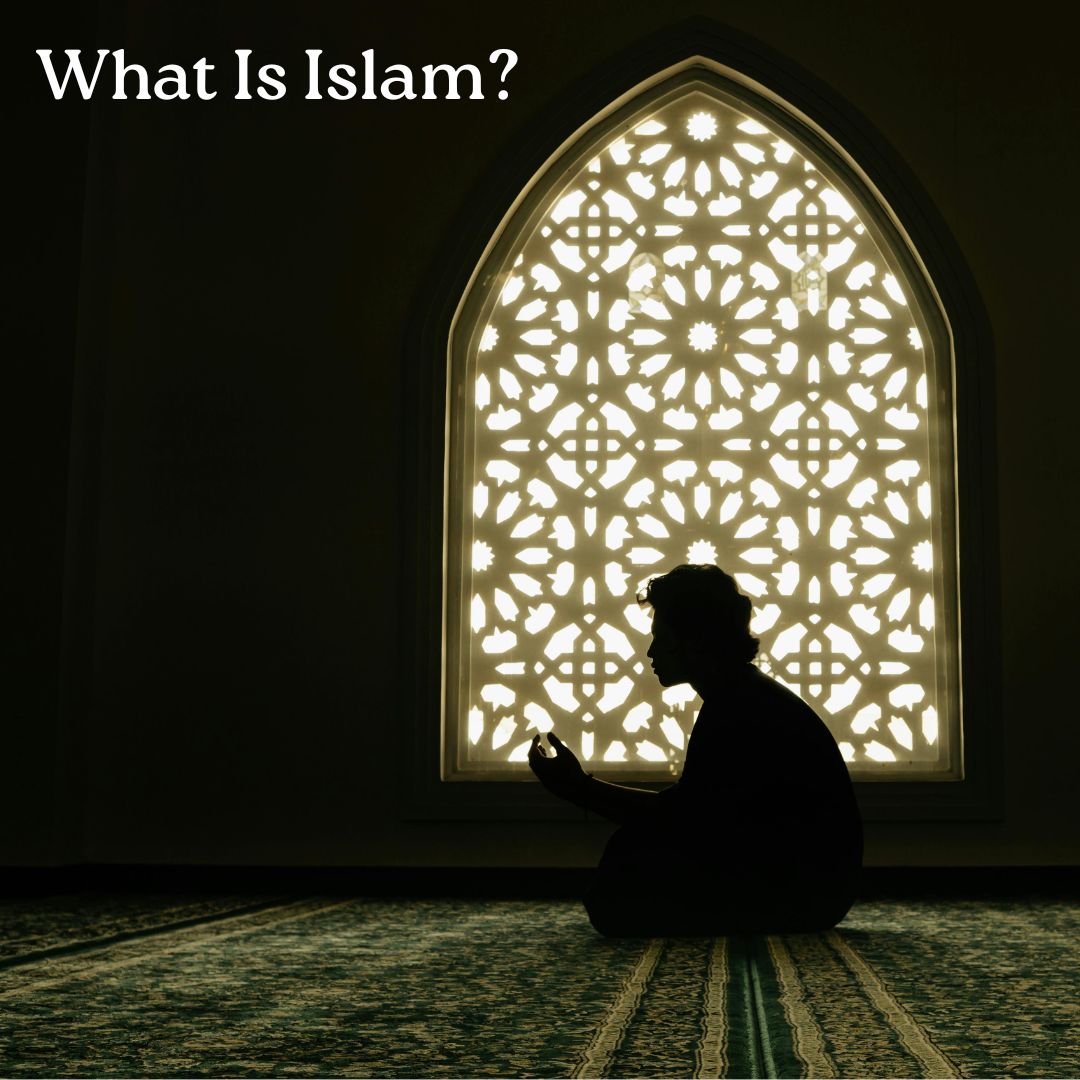
Islam is a divinely revealed monotheistic religion sent by Allah (God) for the guidance of all humanity. The word Islam comes from the Arabic root “س ل م (S-L-M)”, which means peace, submission, and surrender.
In Islam, peace is achieved by submitting one’s will completely to Allah, the Creator of the heavens and the earth.
Allah says in the Qur’an:
“Indeed, the religion in the sight of Allah is Islam.”
(Surah Aal-e-Imran 3:19)
Islam is not a new religion; it is the same message preached by all prophets, including Adam, Noah, Abraham, Moses, Jesus (peace be upon them all), and finally completed through Prophet Muhammad ﷺ.
The Meaning of Islam in Simple Words
Islam means:
- Belief in One God (Allah)
- Submission to His commands
- Living a life of righteousness, justice, and mercy
- Preparing for the Hereafter
A person who follows Islam is called a Muslim, meaning one who submits to Allah.
Allah states:
“And whoever submits his face to Allah while doing good, then he has grasped the most trustworthy handhold.”
(Surah Luqman 31:22)
Who Is Allah in Islam?
Allah is:
- One and Unique
- Without partners
- Neither born nor gives birth
- Beyond human comparison
This is clearly explained in Surah Al-Ikhlas:
“Say: He is Allah, the One.
Allah, the Eternal Refuge.
He neither begets nor is born.
Nor is there to Him any equivalent.”
(Surah Al-Ikhlas 112:1-4)
Islam strongly rejects polytheism (shirk) and teaches pure monotheism (Tawheed).
The Core Beliefs of Islam (Articles of Faith)
Islam is built upon six fundamental beliefs:
1. Belief in Allah
Believing that Allah alone deserves worship.
2. Belief in Angels
Angels are created from light and obey Allah completely.
“…honored servants who do not disobey Allah in what He commands them.”
(Surah At-Tahrim 66:6)
3. Belief in Divine Books
Including:
- Torah
- Psalms
- Gospel
- Qur’an (final and preserved revelation)
“Indeed, We have sent down the Qur’an, and indeed, We will be its guardian.”
(Surah Al-Hijr 15:9)
4. Belief in Prophets
From Adam to Muhammad ﷺ.
“We make no distinction between any of His messengers.”
(Surah Al-Baqarah 2:285)
5. Belief in the Day of Judgment
Every soul will be accountable.
“So whoever does an atom’s weight of good will see it.”
(Surah Az-Zalzalah 99:7)
6. Belief in Divine Decree (Qadr)
Everything happens by Allah’s knowledge and wisdom.
The Five Pillars of Islam
The Five Pillars of Islam are the foundation of Muslim life:
1. Shahada (Declaration of Faith)
“There is no god but Allah, and Muhammad is the Messenger of Allah.”
2. Salah (Prayer)
Five daily prayers establish discipline and connection with Allah.
“Indeed, prayer prohibits immorality and wrongdoing.”
(Surah Al-Ankabut 29:45)
3. Zakat (Charity)
Purifies wealth and helps the needy.
“Take from their wealth a charity by which you purify them.”
(Surah At-Tawbah 9:103)
4. Sawm (Fasting in Ramadan)
Teaches self-control and spirituality.
“Fasting has been prescribed for you as it was prescribed for those before you.”
(Surah Al-Baqarah 2:183)
5. Hajj (Pilgrimage)
Once in a lifetime for those who can afford it.
What Does Islam Teach About Life?
Islam provides guidance for every aspect of life, including:
- Family and marriage
- Business ethics
- Justice and human rights
- Cleanliness and hygiene
- Peaceful coexistence
- Respect for parents
- Kindness to neighbors
- Protection of women and orphans
Allah says:
“Indeed, Allah commands justice, excellence, and giving to relatives.”
(Surah An-Nahl 16:90)
Islam and Peace
Contrary to misconceptions, Islam strongly promotes peace.
“And if they incline to peace, then incline to it.”
(Surah Al-Anfal 8:61)
The greeting of Muslims itself reflects peace:
“As-Salamu Alaikum” — Peace be upon you
The Qur’an: The Final Divine Guidance
The Qur’an is the final, unchanged word of Allah revealed to Prophet Muhammad ﷺ. It serves as:
- A book of guidance
- A source of law
- A moral compass
- A spiritual cure
“This Qur’an guides to that which is most upright.”
(Surah Al-Isra 17:9)
Why Islam Is a Complete Way of Life
Islam is not limited to worship only; it is a complete system for life that balances:
- Faith and reason
- Worldly life and the Hereafter
- Individual rights and social responsibility
Allah says:
“Today I have perfected for you your religion.”
(Surah Al-Ma’idah 5:3)
Conclusion: What Is Islam in One Sentence?
Islam is the complete submission to Allah alone, following His guidance revealed in the Qur’an, to achieve peace in this life and success in the Hereafter.
Learn More About Islam and the Qur’an
For authentic Islamic knowledge, Qur’anic recitation, meanings, and spiritual guidance—especially Surah Yaseen with translation and audio—visit:
A trusted source for deepening your understanding of Islam through the Holy Qur’an.
One of the most fundamental questions in Islam is “What is Iman in Islam?”
Iman is the core of Islamic faith, the foundation upon which belief, worship, and righteous living are built. Without Iman, actions lose meaning; with Iman, even small deeds gain immense value.
In Islam, Iman is not a vague feeling or inherited identity. It is a conscious belief rooted in the heart, affirmed through understanding, and reflected in actions — all guided by the Qur’an.
Allah says:
“The believers are only those who have believed in Allah and His Messenger, then do not doubt, and strive with their wealth and their lives in the cause of Allah.”
(Surah Al-Hujurat 49:15)
This verse clearly shows that Iman is certainty, not doubt, and it shapes how a believer lives.
The Meaning of the Word “Iman”
The word Iman (إيمان) comes from the Arabic root A-M-N, which means:
- To believe
- To feel secure
- To trust
- To have certainty
In Islam, Iman means firm belief and inner conviction in the truth revealed by Allah.
Allah describes true believers as those who attain inner peace through belief:
“It is He who sent down tranquility into the hearts of the believers so that they may increase in faith upon faith.”
(Surah Al-Fath 48:4)
This verse shows that Iman resides in the heart and can grow stronger.
What Is Iman in Islam According to the Qur’an?
In Islam, Iman is belief in what Allah has revealed, without hesitation or rejection.
Allah says:
“The Messenger has believed in what was revealed to him from his Lord, and so have the believers.”
(Surah Al-Baqarah 2:285)
Iman is not blind faith. It is belief based on truth, guidance, and divine knowledge.
The Qur’an repeatedly connects Iman with certainty (yaqeen):
“Indeed, the believers are those who, when Allah is mentioned, their hearts tremble.”
(Surah Al-Anfal 8:2)
This trembling is not fear alone — it is deep awareness and reverence born of faith.
The Core Elements of Iman in Islam
The Qur’an outlines the essential components of Iman, which together form complete belief.
Allah states:
“Righteousness is not that you turn your faces toward the east or the west, but righteousness is believing in Allah, the Last Day, the angels, the Book, and the prophets.”
(Surah Al-Baqarah 2:177)
From the Qur’an, Iman includes belief in:
- Allah
- His Angels
- His Revealed Books
- His Messengers
- The Day of Judgment
- Divine Knowledge and Decree
These beliefs shape a believer’s worldview, purpose, and accountability.
Belief in Allah: The Foundation of Iman
The most important aspect of Iman is belief in Allah alone, without partners.
“So know that there is no deity except Allah.”
(Surah Muhammad 47:19)
Belief in Allah includes believing that He is:
- One
- Eternal
- All-Knowing
- All-Powerful
- Most Merciful
- Perfectly Just
“There is nothing like unto Him.”
(Surah Ash-Shura 42:11)
Without belief in Allah, Iman does not exist.
Belief in Angels as Part of Iman
The Qur’an affirms the existence of angels as part of faith.
“Whoever disbelieves in Allah, His angels, His books, His messengers, and the Last Day has certainly gone far astray.”
(Surah An-Nisa 4:136)
Angels are unseen beings created by Allah who carry out His commands with complete obedience.
“They do not disobey Allah in what He commands them.”
(Surah At-Tahrim 66:6)
Belief in angels strengthens awareness that Allah’s system is precise and just.
Belief in the Divine Books
Iman requires belief in the revelations sent by Allah, culminating in the Qur’an.
“This is the Book in which there is no doubt, a guidance for the God-conscious.”
(Surah Al-Baqarah 2:2)
The Qur’an is the final and preserved revelation, and belief in it is a central part of Iman.
“Indeed, We have sent down the Reminder, and indeed, We will preserve it.”
(Surah Al-Hijr 15:9)
Belief in the Messengers of Allah
Allah sent messengers to guide humanity, and belief in them is essential to Iman.
“We make no distinction between any of His messengers.”
(Surah Al-Baqarah 2:285)
Prophet Muhammad ﷺ is the final messenger, completing divine guidance.
“Muhammad is the Messenger of Allah and the Seal of the Prophets.”
(Surah Al-Ahzab 33:40)
Rejecting any messenger is considered rejection of faith itself.
Belief in the Day of Judgment
A defining feature of Iman is belief in life after death and accountability.
“Every soul will taste death, then to Us you will be returned.”
(Surah Al-Ankabut 29:57)
The Qur’an describes the Day of Judgment as a day of absolute justice:
“And We will set up the scales of justice on the Day of Resurrection.”
(Surah Al-Anbiya 21:47)
Iman shapes behavior because believers know every action matters.
Belief in Divine Knowledge and Decree
Iman includes belief that Allah has complete knowledge of all things.
“Indeed, Allah has knowledge of all things.”
(Surah Al-Baqarah 2:231)
Nothing happens outside Allah’s knowledge or wisdom.
“No disaster strikes except by permission of Allah.”
(Surah At-Taghabun 64:11)
This belief brings patience, trust, and resilience.
Iman Is in the Heart, Not Mere Words
The Qur’an makes a clear distinction between claiming faith and possessing faith.
“The Bedouins say, ‘We believe.’ Say: You have not believed; rather say, ‘We have submitted,’ for faith has not yet entered your hearts.”
(Surah Al-Hujurat 49:14)
True Iman resides in the heart and is reflected in sincerity and obedience.
Iman and Righteous Deeds
Although Iman is belief, the Qur’an consistently links it with action.
“Indeed, those who believe and do righteous deeds will have gardens beneath which rivers flow.”
(Surah Al-Baqarah 2:25)
Good deeds are proof of living faith, not a replacement for belief.
Can Iman Increase or Decrease?
The Qur’an clearly indicates that Iman can grow stronger.
“So that they may increase in faith along with their faith.”
(Surah Al-Fath 48:4)
Iman increases through:
- Reflection on the Qur’an
- Obedience to Allah
- Remembering Allah
- Avoiding sin
Neglect weakens faith, while remembrance strengthens it.
Iman Brings Inner Peace
One of the greatest results of true Iman is tranquility of the heart.
“Unquestionably, by the remembrance of Allah hearts find rest.”
(Surah Ar-Ra’d 13:28)
Faith removes despair and replaces it with hope and trust.
Iman and Moral Character
The Qur’an describes believers as people of integrity and ethics.
“Successful indeed are the believers… those who are truthful to their trusts and promises.”
(Surah Al-Mu’minun 23:1–8)
Iman refines character, speech, and behavior.
Iman and Trials in Life
Life is a test, and Iman is strengthened through patience.
“Do people think they will be left to say, ‘We believe,’ and not be tested?”
(Surah Al-Ankabut 29:2)
Trials separate sincere believers from false claims.
The Difference Between Islam and Iman
The Qur’an distinguishes between external submission (Islam) and internal conviction (Iman).
Islam is outward obedience; Iman is inward certainty.
Both together form complete faith.
Signs of True Iman in the Qur’an
Allah describes believers as those who:
- Trust Allah
- Pray consistently
- Give charity
- Avoid falsehood
- Prepare for the Hereafter
“Indeed, the believers have succeeded.”
(Surah Al-Mu’minun 23:1)
Why Iman Is Central to Islam
Without Iman:
- Worship becomes empty
- Morality loses foundation
- Life loses purpose
With Iman:
- Actions gain meaning
- Patience increases
- Hope remains alive
“Whoever believes in Allah, He will guide his heart.”
(Surah At-Taghabun 64:11)
Conclusion: What Is Iman in Islam?
Iman in Islam is firm belief in Allah, His guidance, His messengers, the Hereafter, and divine truth — rooted in the heart, affirmed by certainty, and reflected through righteous living.
It is the light that guides a believer through life and into the Hereafter.

The Five Pillars of Islam are the core acts of worship and belief that form the foundation of a Muslim’s faith and daily life. They represent the essential framework upon which Islam stands, shaping a believer’s relationship with Allah, society, and the Hereafter.
Islam is not merely a belief system but a complete way of life, and the Five Pillars serve as its structural backbone. Each pillar reflects submission, obedience, discipline, and spiritual growth, all rooted in the guidance of the Holy Qur’an.
Allah declares:
“Indeed, the religion in the sight of Allah is Islam.”
(Surah Aal-e-Imran 3:19)
Understanding the Five Pillars of Islam is essential for understanding what Islam truly teaches, how Muslims worship, and how faith is practiced in everyday life.
Why the Five Pillars of Islam Are Important
The Five Pillars of Islam:
- Establish Tawheed (Oneness of Allah)
- Purify the soul and character
- Create moral discipline
- Promote social justice and equality
- Prepare believers for accountability in the Hereafter
Allah says:
“And I did not create the jinn and mankind except to worship Me.”
(Surah Adh-Dhariyat 51:56)
Each pillar is a direct response to this purpose of creation.
Overview of the Five Pillars of Islam
The Five Pillars of Islam are:
- Shahada – Declaration of Faith
- Salah – Daily Prayer
- Zakat – Obligatory Charity
- Sawm – Fasting in the Month of Ramadan
- Hajj – Pilgrimage to the House of Allah
Each pillar is deeply rooted in Qur’anic teachings and reflects a different dimension of worship.
First Pillar of Islam: Shahada (Declaration of Faith)
What Is Shahada?
Shahada is the foundation of Islam and the entry point into the faith. It is the testimony that affirms belief in the Oneness of Allah and His guidance.
The essence of Shahada is absolute monotheism (Tawheed).
Allah states clearly:
“So know that there is no deity except Allah.”
(Surah Muhammad 47:19)
And:
“Allah bears witness that there is no deity except Him.”
(Surah Aal-e-Imran 3:18)
The Meaning of Shahada in Islam
Shahada signifies:
- Rejecting all false gods
- Accepting Allah as the only Creator and Sustainer
- Accepting divine guidance revealed through revelation
The Qur’an repeatedly emphasizes exclusive worship of Allah:
“Worship Allah and associate nothing with Him.”
(Surah An-Nisa 4:36)
Shahada is not merely spoken—it is lived through obedience, sincerity, and belief.
Second Pillar of Islam: Salah (Prayer)
What Is Salah?
Salah is the daily obligatory prayer performed at prescribed times. It is the most consistent act of worship in a Muslim’s life and represents direct communication with Allah.
Allah commands:
“Establish prayer for My remembrance.”
(Surah Taha 20:14)
Importance of Salah in the Qur’an
Prayer is mentioned dozens of times in the Qur’an, highlighting its central role.
“Indeed, prayer prohibits immorality and wrongdoing.”
(Surah Al-Ankabut 29:45)
Salah:
- Strengthens faith
- Purifies the heart
- Instills discipline
- Connects believers to Allah throughout the day
Spiritual Purpose of Salah
Allah describes believers as those who:
“Are constant in their prayers.”
(Surah Al-Ma’arij 70:23)
Prayer is a spiritual anchor, reminding humans of their dependence on Allah and their accountability before Him.
Third Pillar of Islam: Zakat (Obligatory Charity)
What Is Zakat?
Zakat is the obligatory giving of a fixed portion of wealth to those in need. It is not optional charity but a right of the poor over the wealth of the rich.
Allah commands:
“Establish prayer and give Zakat.”
(Surah Al-Baqarah 2:110)
Purpose of Zakat in Islam
Zakat serves to:
- Purify wealth
- Reduce inequality
- Support the needy
- Strengthen social bonds
Allah says:
“Take from their wealth a charity by which you purify them and cause them increase.”
(Surah At-Tawbah 9:103)
Zakat as Social Justice
The Qur’an defines rightful recipients of Zakat, ensuring fairness and compassion within society.
“And in their wealth there is a known right for the needy and deprived.”
(Surah Al-Ma’arij 70:24–25)
Zakat transforms wealth into a means of worship and responsibility.
Fourth Pillar of Islam: Sawm (Fasting in Ramadan)
What Is Sawm?
Sawm refers to fasting during the month of Ramadan, from dawn until sunset, abstaining from food, drink, and immoral behavior.
Allah states:
“O you who believe, fasting has been prescribed for you as it was prescribed for those before you, that you may become righteous.”
(Surah Al-Baqarah 2:183)
Spiritual Purpose of Fasting
Fasting is not merely physical hunger; it is spiritual training.
It teaches:
- Self-control
- Patience
- Gratitude
- God-consciousness (Taqwa)
Allah further says:
“The month of Ramadan is that in which the Qur’an was revealed as guidance for mankind.”
(Surah Al-Baqarah 2:185)
Fasting and Moral Discipline
Sawm refines character and strengthens the connection with Allah, reminding believers of those who live with hunger daily.
Fifth Pillar of Islam: Hajj (Pilgrimage)
What Is Hajj?
Hajj is the pilgrimage to the Sacred House (Kaaba) in Makkah, required once in a lifetime for those who are physically and financially able.
Allah commands:
“And proclaim to mankind the Hajj.”
(Surah Al-Hajj 22:27)
And:
“Pilgrimage to the House is a duty owed to Allah by those who are able.”
(Surah Aal-e-Imran 3:97)
Spiritual Meaning of Hajj
Hajj represents:
- Unity of believers
- Equality of humanity
- Total submission to Allah
Pilgrims abandon status, wealth, and identity to stand equally before their Creator.
Hajj and Accountability
Hajj is a reminder of the Day of Judgment, where all humans will stand before Allah without distinction.
How the Five Pillars Shape a Muslim’s Life
The Five Pillars of Islam:
- Strengthen faith daily (Shahada & Salah)
- Purify wealth and society (Zakat)
- Discipline desires (Sawm)
- Unite the Ummah globally (Hajj)
Allah describes successful believers as:
“Those who believe, perform righteous deeds, establish prayer, and give Zakat.”
(Surah Al-Baqarah 2:277)
Five Pillars of Islam and the Hereafter
Every pillar prepares believers for accountability after death.
“Every soul will taste death, then to Us you will be returned.”
(Surah Al-Ankabut 29:57)
The Five Pillars serve as means of success, not burden.
“Allah intends for you ease and does not intend hardship for you.”
(Surah Al-Baqarah 2:185)
Common Misconceptions About the Five Pillars of Islam
- They are not rituals without meaning
- They are not limited to culture
- They are not oppressive
- They are acts of mercy and guidance
Islam balances faith, action, and ethics.
Conclusion: Why the Five Pillars of Islam Matter
The Five Pillars of Islam define what it means to live as a Muslim. They build faith, discipline the soul, purify society, and prepare humanity for the Hereafter.
“Whoever does righteousness, whether male or female, while being a believer – We will grant them a good life.”
(Surah An-Nahl 16:97)
Islam stands firm on these pillars—simple in practice, profound in meaning, and eternal in guidance.

Introduction
One of the most frequently asked questions about Islam is, “Why do Muslims pray 5 times a day?” This daily practice, known as Salah or Salat, is a central pillar of Islam and is obligatory for all practicing Muslims. The act of praying five times a day may seem rigorous or excessive to those unfamiliar with the faith, but it holds deep spiritual, psychological, and physical benefits. More than just a religious duty, it is a discipline that connects the believer with God (Allah), purifies the soul, and brings structure to daily life.
Understanding Salah in Islam
Salah is the second of the Five Pillars of Islam, after the testimony of faith (Shahada). Muslims believe that prayer is a direct link between the worshipper and Allah. It was established during the Miraj (Ascension) of Prophet Muhammad (PBUH) when Allah directly commanded him to instruct his followers to pray five times a day.
These five daily prayers are:
- Fajr: The dawn prayer
- Dhuhr: The noon prayer
- Asr: The afternoon prayer
- Maghrib: The sunset prayer
- Isha: The night prayer
Each prayer has a designated time, and Muslims are required to perform them at these specific intervals to fulfill their religious obligation.
The Spiritual Reasons Behind Praying 5 Times a Day
At the core of Islamic prayer is the concept of submission to the Creator. Salah is an act of devotion that allows Muslims to express their gratitude, seek forgiveness, and remember the greatness of Allah. It reinforces Taqwa (God-consciousness) and humility. Praying five times daily ensures that a Muslim’s day is punctuated with moments of reflection and remembrance of God.
Moreover, regular prayer helps Muslims develop discipline and structure in their lives. It reminds them that no matter how busy or stressful life becomes, taking a few moments to reconnect with the Divine is essential.
Psychological and Emotional Benefits
Beyond its spiritual importance, praying five times a day has numerous psychological and emotional advantages. Studies in both Islamic and non-Islamic contexts have shown that regular spiritual practices such as prayer can reduce stress, anxiety, and feelings of loneliness. The act of facing the Qibla (direction of the Kaaba in Mecca), performing ritual ablution (Wudu), and engaging in physical movements such as bowing and prostrating contributes to a meditative state of mind.
This mindfulness during prayer can improve emotional well-being and promote inner peace. Many Muslims report that after prayer, they feel calmer, more focused, and spiritually uplifted, regardless of what they were experiencing before the prayer.
Physical and Health Aspects of Daily Prayer
The physical movements in Salah are also beneficial. The repeated actions of standing, bowing, prostrating, and sitting can be compared to a form of light exercise. These movements enhance circulation, improve flexibility, and help maintain joint health. Over the long term, the daily ritual can contribute to better posture, muscle tone, and even digestion.
Additionally, the regularity of prayer encourages good hygiene through the act of Wudu, which requires washing specific parts of the body before each prayer. This not only ensures cleanliness but also revitalizes the body and refreshes the mind.
Building a Connection With the Muslim Ummah
Another powerful reason why Muslims pray five times a day is the sense of unity and belonging it fosters. When Muslims gather in mosques to perform the daily prayers, especially the Friday congregational prayer (Jumu’ah), they experience a unique sense of community. This practice breaks down social barriers and reminds everyone of their equality before God.
Even when prayed individually, knowing that millions of Muslims around the world are praying at the same time creates a spiritual bond with the global Ummah (Muslim community). This shared ritual strengthens faith and solidarity across borders.
A Way of Life, Not Just a Ritual
For Muslims, Salah is not a ritual performed out of habit or cultural tradition. It is a conscious and sincere act of worship meant to transform their lives. The daily prayers are designed to keep believers grounded in their faith and aware of their responsibilities as human beings. The Qur’an says in Surah Al-Ankabut (29:45): “Indeed, prayer prohibits immorality and wrongdoing, and the remembrance of Allah is greater.”
This verse underscores the ultimate purpose of prayer: to remind believers to live righteous and ethical lives. Regular prayer inspires moral conduct and encourages believers to strive for spiritual excellence.
Conclusion
Understanding why Muslims pray five times a day requires looking beyond the surface of religious ritual and into the deeper meanings of faith, discipline, and connection. For Muslims, prayer is not a burden but a gift—a daily reminder of God’s presence and a powerful tool for spiritual growth. It fosters inner peace, strengthens community bonds, and provides a framework for leading a purposeful life.
Whether viewed from a spiritual, psychological, or social perspective, the five daily prayers in Islam represent a profound and holistic approach to living a mindful, faithful, and balanced life.
-

 Blog2 years ago
Surah Muzammil
-

 Blog1 year ago
Nazar Ki Dua by Prophet ﷺ
-

 Blog1 year ago
Surah Yaseen
-

 Blog2 years ago
Surah Nasr
-

 Blog2 years ago
Nazar Ki Dua
-

 Blog2 years ago
Surah Yaseen: The Heart of the Quran and Its Blessings
-

 Blog2 years ago
Evil Eye Protection, Symptoms, Remedies & Removal?
-

 Dua1 year ago
Dua for Protection, Powerful Islamic Prayers for Daily Safety from Enemies and Evil